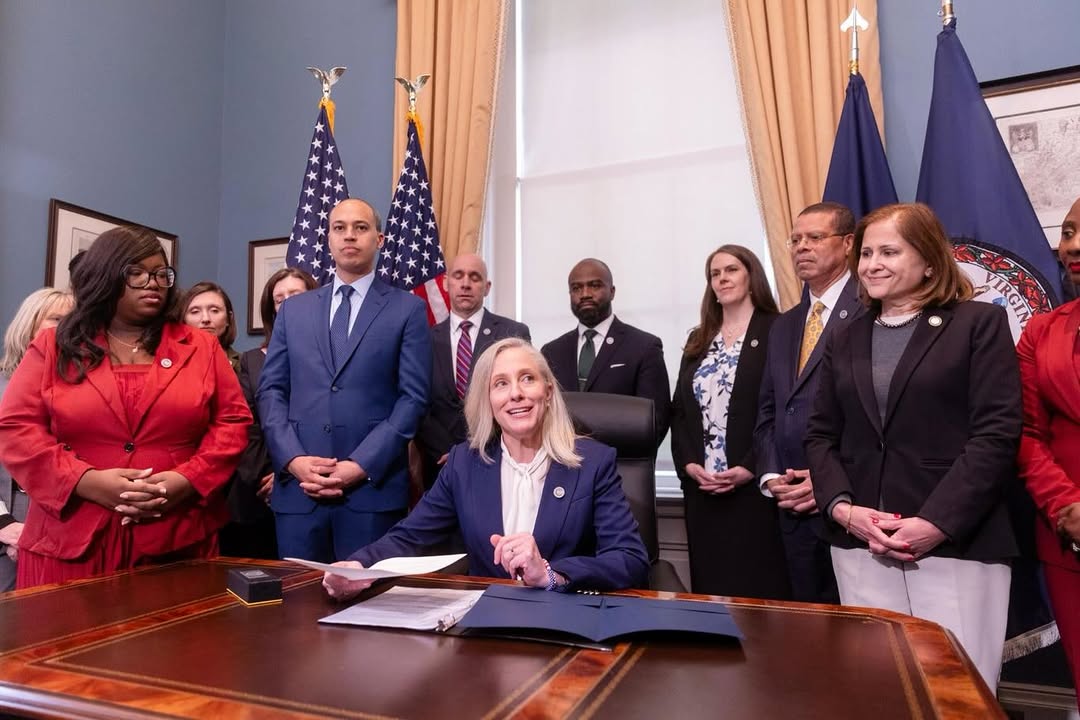
Virginia’s higher education system is entering a new chapter following a year of intense political conflict over university governance, board appointments, and federal scrutiny. Within hours of taking office, Gov. Abigail Spanberger moved to reset the state’s approach by appointing dozens of new members to university governing boards and ordering a formal review of how those appointments are made.
Spanberger announced 27 nominees to the Boards of Visitors at George Mason University, the University of Virginia and the Virginia Military Institute, institutions that have faced prolonged vacancies after the General Assembly rejected dozens of nominees under former Gov. Glenn Youngkin. Her actions come amid continued concern among Democratic lawmakers that political pressure—particularly aligned with Trump’s federal priorities—has threatened institutional autonomy across Virginia’s public colleges.
In Executive Order No. 6, Spanberger directed the secretary of education, in consultation with the secretary of the commonwealth, to conduct a comprehensive review of the board appointment and confirmation process.
“Under the current federal administration, Virginia colleges and universities have faced unprecedented challenges from shifts in federal policy to attacks on institutional autonomy and mission,” Spanberger said. “These pressures underscore the urgent need for the commonwealth to reevaluate how governing boards are appointed, ensuring they are composed of individuals dedicated to upholding the quality, independence, and reputation of our institutions.”

The move follows a bruising 2025 legislative session in which Senate Democrats rejected 22 of Youngkin’s nominees, citing concerns over diversity, equity and inclusion policies and what lawmakers described as efforts to align university governance with Trump administration priorities. That standoff escalated into litigation that ultimately became moot after the change in administration.
University of Richmond School of Law professor Carl Tobias said Spanberger’s order reflects an attempt to depoliticize a process that has increasingly shaped campus decision-making.
“The governor is aware and has witnessed … the apparent politicization of the boards especially at UVA and George Mason,” Tobias told the Virginia Mercury, adding that the review could help “improve the process of selection and then improve the governing capabilities of the boards.”
The stakes are particularly high at institutions facing federal investigations. George Mason University remains under a U.S. Department of Justice civil rights investigation related to allegations of racial discrimination. At UVA, a DOJ probe into diversity, equity and inclusion policies and antisemitism allegations prompted former President Jim Ryan’s resignation last year. Although five of seven investigations were later suspended, Democrats and campus leaders raised concerns about federal overreach.
Spanberger’s appointments also extend to VMI, where she nominated former Gov. Ralph Northam to the governing board. A 2021 state report found that “racial and gender disparities exist and that improvement is needed” at the institution, noting that racial slurs and jokes were “not uncommon” on campus. Northam previously created the commonwealth’s first executive-branch DEI office as governor.
At the same time, Attorney General Jay Jones has signaled a broader legal reset affecting Virginia’s public universities. On his first day in office, Jones pledged to challenge federal actions tied to the Trump administration and reaffirm institutional independence.
“Virginia will not sit on the sidelines while Washington puts politics over people,” Jones said. “When federal actions threaten Virginians’ rights, health care, or economic security, this office will take action to hold the Trump administration accountable.”
Legislators are also weighing structural reforms. Senate Bill 49, introduced by Sen. Aaron Rouse, would prohibit gubernatorial appointees from serving on university boards until they are fully confirmed by the General Assembly. “No Governor, Democrat or Republican, should be able to bypass the General Assembly and place unconfirmed appointees into powerful roles,” Rouse said.
The governor’s review is expected to be completed by mid-March, while lawmakers are likely to consider both the new board nominees and Senate Bill 49 before crossover day in February—decisions that could shape Virginia’s higher education governance for years to come.