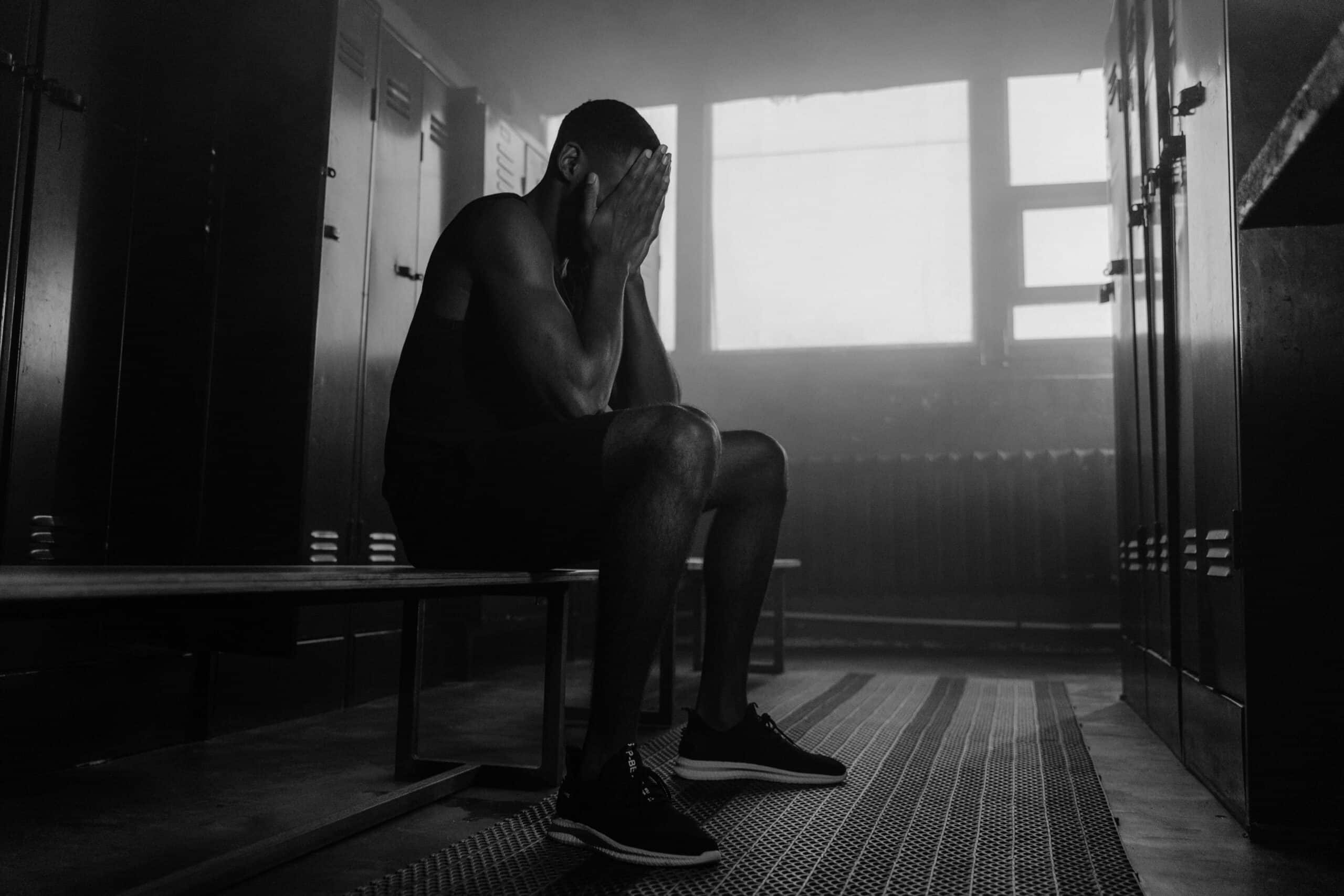
A rule in place since 2019 sets baseline expectations for every NCAA member college. Now the association is training coaches to spot problems before they become crises.
For much of its history, the NCAA treated athletes’ mental health as a matter of good practice rather than an obligation. That changed in 2019, when member colleges adopted a rule requiring every school in all three divisions to make mental health services and resources available to its student-athletes. The association’s constitution, rewritten in 2022, goes further. It states that college sports must be run in a way that protects, supports, and enhances athletes’ mental and physical health.
Increasingly, the NCAA is counting on people who aren’t clinicians to help meet that commitment. Divisions II and III schools now pay for coaches and athletic trainers to take Mental Health First Aid (MHFA). The course teaches people without clinical training to spot signs of trouble and steer athletes toward care.
“For many college athletes, they see the trainers and coaches as their closest and most trusted adult figures on campus,” said Judith LeDoux, a certified Mental Health First Aider who directs a program for public safety workers at Anna Maria College. “Having them trained in MHFA can only provide a benefit to athletics staff and student-athletes.”

The Rule Requirements
The requirement points colleges to the NCAA’s Mental Health Best Practices. The guide was drawn up with more than 20 medical, mental health, and athletic organizations and was updated in 2024. It rests on four pillars.
First, each athletic department should have a written plan for promoting mental health, developed with a licensed provider. Second, every athlete should be screened for psychological distress at least once a year using a scientifically validated questionnaire. Third, schools need written action plans that spell out how athletes are referred for care in routine and emergency situations, and who is involved. Fourth, only licensed mental health professionals should be in charge of diagnosis and treatment.
Beyond those core elements, the guide encourages schools to train coaches each year, teach athletes about the importance of sleep, and offer guidance on social media and name, image, and likeness (NIL) deals. It also acknowledges that approaches “will vary by school,” depending on athletes’ needs and available local resources.
What Athletes Report
The NCAA’s most recent Student-Athlete Health and Wellness Study surveyed 23,272 college athletes during the 2022-23 academic year. It found that mental health concerns had eased since the height of the pandemic but remained high. Among women, 44% said they felt overwhelmed by all they had to do constantly or nearly every day, and 29% reported overwhelming anxiety. The figures for men were 17% and 9%. Academics, planning for the future, and finances were the stressors cited most often.
About 70% of respondents said they knew where to go on campus for mental health help, yet only half said they would feel comfortable seeing a campus provider.
Trust in coaches has slipped. Just 40% of women said they would feel comfortable discussing mental health with their coaches, down from 49% in 2019. Among men, the share fell from 62% to 54%. Coaches, meanwhile, report carrying more of the load. In a 2022 NCAA survey, more than 80% said they were spending more time on athletes’ mental health concerns than before the pandemic.
Coaches Are Becoming First Responders
Division III launched its training program in March 2025 with the National Council for Mental Wellbeing. Up to 30 staff members at each school can complete a 7½-hour session, which certifies them for three years. By late July 2025, 66 of the division’s colleges had finished the training. Division II opened a similar program in August 2026, with both virtual and in-person sessions.
“In this population, I have found that the knowledge gained as part of the MHFA program has helped decrease the stigma related to mental illness in athletics,” said Jennifer Ostrowski, director of the athletic training program at Moravian University. “The skills and techniques have empowered coaches to approach athletes with their concerns and encourage them to seek professional mental health services.”
Questions Remain Unclear
It is not yet known whether that approach leads to better outcomes for athletes. The NCAA’s public materials also say little about how schools’ compliance with the mental health requirement is monitored.
The pressures on athletes are changing, too. The best practices guide flags social media, NIL deals and sports betting as emerging risks that may add to concerns around performance and body image. The NCAA committee that oversees athletes’ health helps shape the guide. It met in mid-September to discuss issues around sports betting and online harassment.
The latest survey data also was collected before colleges began paying athletes directly. That leaves open how these students are faring now that many of them are also being compensated.