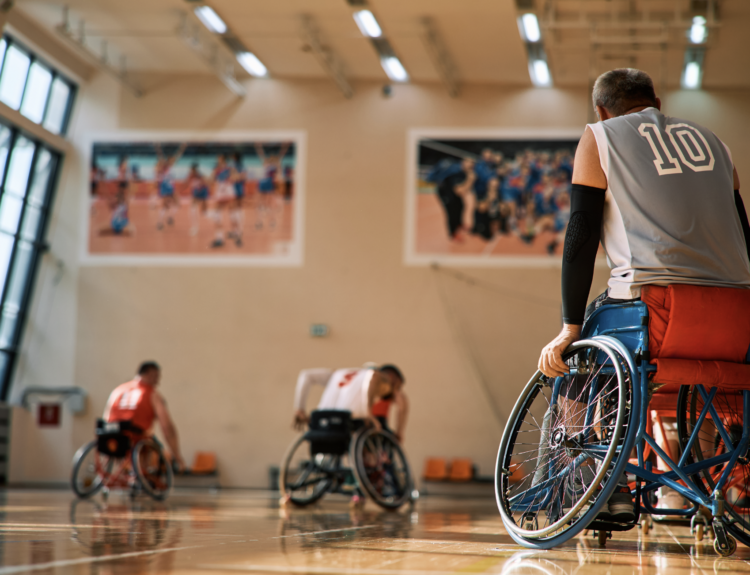

At the time of this writing, Nijel Pack is a student-athlete at the University of Oklahoma, concluding his sixth season of collegiate basketball eligibility. An elite shooting guard, Pack transferred to Oklahoma in April 2025 after entering the transfer portal. Before that, Pack attended and played at the University of Miami, arriving there after entering the transfer portal in 2022. At the time, he was widely regarded as one of the most sought-after players available. His commitment to Miami coincided with a reported two-year, $800,000 Name, Image, Likeness (NIL) deal with LifeWallet, a company owned by a university booster, along with additional benefits, including a car. Before landing at Miami, he played for Kansas State University. Over the course of his collegiate athletic career, he also declared for the NBA draft twice, withdrawing both times to preserve his collegiate eligibility.
His continuous transfer course of action—now increasingly common—illustrates a fundamental shift in the structure of college athletics.

Over more than three decades teaching and mentoring student-athletes, particularly those in revenue-generating sports, I have emphasized a consistent message: the probability of turning professional is exceedingly small. A college degree remains the most reliable foundation for long-term success for these students. The data reinforce this reality. Roughly a mere 1.1% to 1.2% of NCAA men’s basketball players are drafted into the NBA. For women, the figure is approximately 0.9%. In football, only about 1.6% of NCAA athletes reach the professional level.
The emergence of NIL compensation and the transfer portal is transforming not only athletes’ economic opportunities, but also their educational trajectories—and, by extension, faculty members’ ability to support them. For those of us invested in student academic development, a pressing question arises: what does meaningful mentorship look like when student-athletes’ institutional affiliations are increasingly transient?


Taken together, NIL and the transfer portal have introduced a functional equivalent of free agency in college sports. Student-athletes signal mobility by entering the portal, while NIL opportunities create powerful incentives to relocate in pursuit of more lucrative opportunities. The result is a heated market dynamic in which recruitment is always ongoing and extremely transactional.
Much of the public debate has focused on whether NIL constitutes de facto pay-for-play, thereby signaling the end of amateur college sports. That debate, while important, obscures a larger structural reality. Universities and adjacent industries continue to enjoy enormous economic benefits from college athletics. In 2025, the top 75 college sports programs were valued at a combined $51.22 billion. Beyond campuses, college athletics drives substantial economic activity, including an estimated $3.3 billion in wagers on the 2026 NCAA basketball tournaments alone. Moreover, emerging betting and prediction markets tied to athlete transfer announcements and decision-making further complicate the landscape.
The transfer portal itself, introduced in 2018, initially served administrative efficiency. Compliance officers gained a centralized system for tracking athletes’ movements and eligibility, while coaches could monitor prospective transfers in real time. Since the NCAA’s 2024 decision to allow unlimited transfers, the portal’s function has expanded dramatically. It now facilitates a level of mobility that fundamentally alters the relationship between student-athletes and their institutions.
This carries academic consequences. As student-athletes transfer with increasing frequency, sometimes mid-academic year, universities’ capacity to provide sustained advising and mentorship diminishes. Faculty relationships, which depend on time, continuity, and cultivating trust, are particularly vulnerable.
Official NCAA metrics offer little indication of concern. The Association reports that the Division I Graduation Success Rate increased from 74% in 2002 to 91% in 2024, with notable gains among Black student-athletes and in football and men’s basketball. On its face, the trend suggests academic progress. However, what may be more opaque is the lived academic experiences of highly mobile athletes whose educational pathways may be fragmented.
Indeed, the current system strains foundational theories of student success. Alexander Astin’s theory of student involvement emphasizes the importance of sustained engagement with the campus environment. Vincent Tinto’s model of retention highlights social and academic integration as critical to persistence. Research by George Kuh and Shouping Hu underscores the development benefits of meaningful student-faculty interaction, particularly when it involves significant investments of time and energy. Terrell Strayhorn has emphasized the centrality of belonging, defined by affirming institutional relationships. These frameworks share the common premise that student success depends on the continuity of (faculty) engagement. The emerging reality of college athletics challenges that premise.
What, then, is to be done? Current policy responses are insufficient. The proposed SCORE Act, introduced in 2025, focuses primarily on regulating NIL compensation and mitigating legal uncertainty. Its provisions related to academics are minimal, requiring only that institutions provide access to academic and career counseling.
A more candid acknowledgement is needed. For a subset of student-athletes, the collegiate experience now resembles a form of short-term contractual engagement within a loosely coordinated higher-education system. Institutions have not adapted their academic support structures to this reality.
Addressing this gap will require both research and institutional innovation. Existing transfer-student frameworks, such as those advanced by the American Council on Education and the National Institute for the Study of Transfer Students, offer useful starting points. In particular, they emphasize coordinated support, college credit mobility, and shared responsibility across institutional units. However, even these more thoughtful models assume a degree of stability that no longer applies to many student-athletes.
New research should center explicitly on multi-transfer student-athletes, examining how mobility shapes their academic decision-making, sense of belonging, and degree attainment. Equally important, institutions should experiment with new mentoring models that are not confined to a single campus. One possibility is a system of distributed, compensated faculty mentorship, supported by athletic departments or governing bodies, that follows student-athletes across institutional boundaries. Such proposals raise significant practical and philosophical questions, including whether highly compensated athletes will prioritize academic engagement.
What is clear is that maintaining models predicated on stability in an environment defined by mobility is no longer tenable. If the structure of college athletics has changed, so too must the methods by which institutions support student learning and development. The question is no longer whether change is necessary, but whether higher education can confront the implications of a changing educational experience.
Robin R. Means Coleman, PhD is a professor of Media Studies and of African American and African Studies at the University of Virginia and a member of the Insight Into Academia Editorial Board.