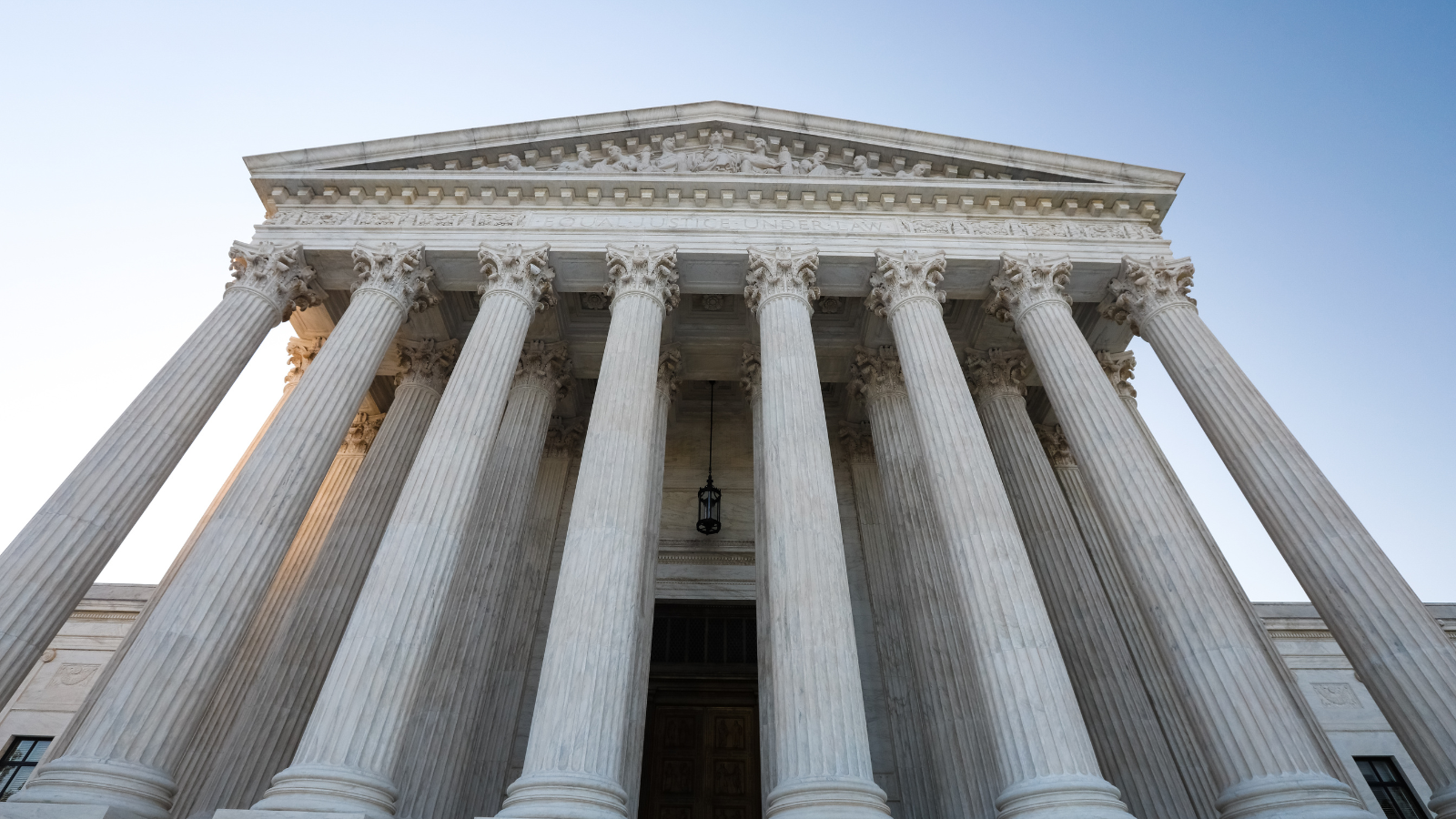
The Supreme Court ruled Tuesday that states may bar transgender girls and women from competing on female sports teams at publicly funded schools, including colleges and universities, in a decision upholding laws already in place in more than two dozen states. The justices were unanimous, 9-0, in finding that the bans do not violate Title IX, the 1972 law barring sex-based discrimination in federally funded education programs. But the court split sharply, 6-3, on a separate and broader question: whether the bans also satisfy the Constitution’s equal protection guarantee. There, the six conservative justices ruled they do, while the three liberal justices dissented, arguing that an unresolved factual dispute in the West Virginia case made it premature to decide.
Justice Brett Kavanaugh, who wrote the majority opinion, framed athletics as a unique category where sex-based distinctions are widely accepted. “Sports are different from, say, a typical employment or educational opportunity,” he wrote, adding that in athletics “everyone agrees that the states may maintain separate women’s and men’s teams… because of the inherent physical differences between women and men.”
The decision resolved two cases with sharply different fact patterns. Lindsay Hecox challenged Idaho’s law after being barred from trying out for Boise State University’s women’s track team; she ultimately stepped back from varsity competition after winning at the lower court level. Becky Pepper-Jackson, a West Virginia teenager who has identified as a girl since early childhood, joined her middle school’s track team before being pushed toward throwing events — where she went on to place among the state’s top competitors in shot put.
West Virginia Attorney General John McCuskey pointed to that success as evidence of a broader pattern, telling NPR that “every single women’s swimming world record, all of them, have been beaten by a boy who’s 16 or younger.”


For colleges and universities — many of which have spent decades building Title IX compliance infrastructure around proportional funding, scholarships and facilities — the ruling creates new uncertainty rather than resolving it. The court left unaddressed how the decision applies beyond varsity competition, including club sports, intramurals and recreational leagues, all common features of campus athletic life. Lower courts and university administrators will likely be left to sort out those boundaries case by case.
The ruling follows last year’s decision allowing states to ban gender-affirming medical care for minors, a holding that has since been followed by bans or restrictions in 25 states. Tuesday’s case arrived amid a broader wave of state-level action affecting transgender people, including restrictions on bathroom access, birth certificate changes, and insurance coverage for transition-related care.
In a concurring opinion, Justice Neil Gorsuch — who authored the court’s 2020 ruling extending workplace protections to LGBTQ employees — argued that decision is consistent with, not undermined by, Tuesday’s outcome. The Trump administration had backed the states in the litigation, and the White House celebrated the ruling Tuesday in a social media post declaring that “women’s sports will only be for women.”
For higher education specifically, the ruling effectively settles the varsity-level question while opening years of likely litigation over how far the logic extends into the rest of campus athletic life.