
Six former U.S. surgeons general gathered at Dartmouth College on Oct. 27 for a rare joint discussion on the worsening youth mental health crisis, identifying social media as a major driver of what they described as an unprecedented public health emergency.
The event, co-hosted by Dartmouth’s Geisel School of Medicine, Dartmouth Health, and the United Nations Development Programme (UNDP), marked only the third time in history that so many former surgeons general have convened to address a single health issue.
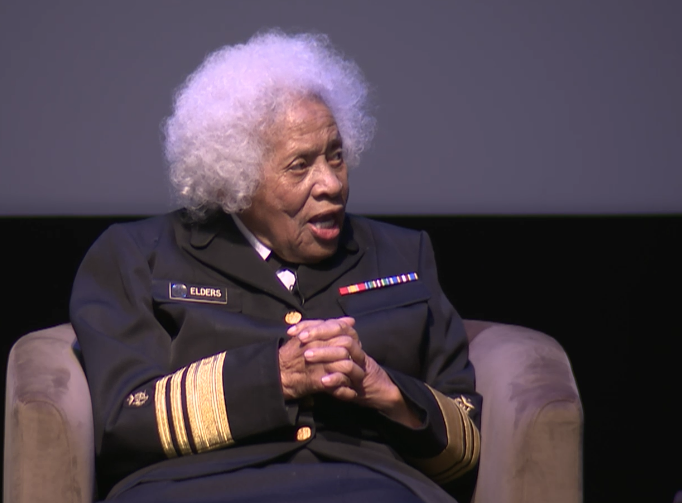
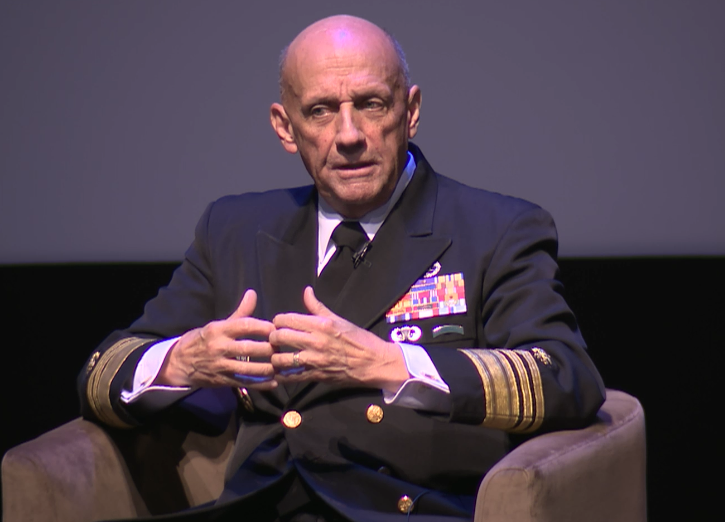
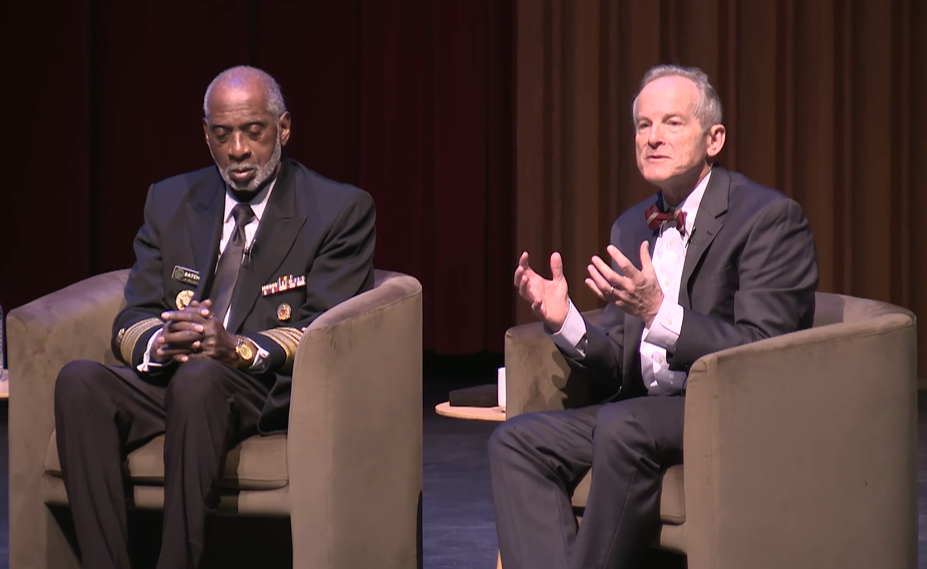
The forum took place during “A Global Turning Point: Why Youth Well-Being Is in Crisis—and What We Must Do About It,” a three-day symposium that brought together experts in medicine, policy, and economics from around the world.
For Dartmouth President Sian Leah Beilock, the gathering embodied the institution’s ongoing commitment to leadership in mental health scholarship and intervention.

“We are really deeply honored to bring the best minds in the world on issues around young people’s mental health together for this historic symposium,” Beilock said, noting that improving student well-being has been one of her top priorities since taking office in 2023.
A Problem Not Recognized Soon Enough
More than 500 people attended the surgeons general panel, with hundreds more tuning in via livestream. The discussion was moderated by Tim Wilens, MD, president-elect of the American Academy of Child and Adolescent Psychiatry and chief of the Division of Child and Adolescent Psychiatry at Massachusetts General Hospital.
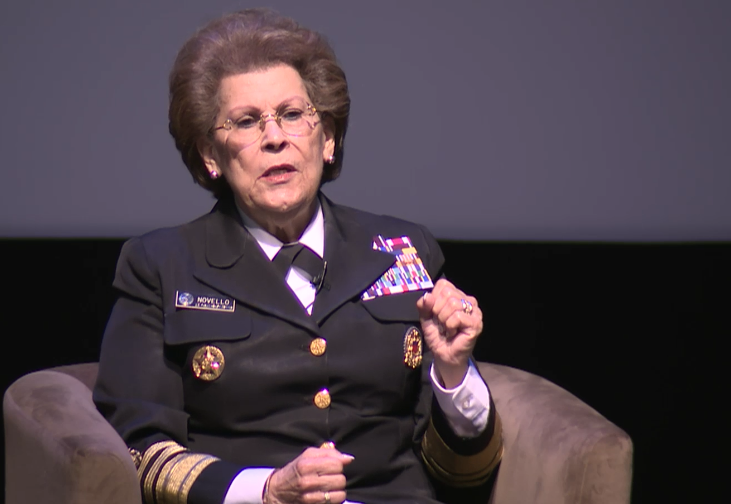
Opening the session, Antonia Coello Novello, MD, who served under President George H.W. Bush, delivered a stark warning about the scope of the problem.
“When you have 31% of United States children, one out of three, having some kind of mental issue in the last 30 days, you have a problem,” Novello said. “But what worries me the most, one out of five have thought about suicide. Sixteen percent have made a plan, and 9% have accomplished it.”
Novello said the surge in youth mental illness correlates directly with the spread of unregulated social media use.
“I believe that social media is one of the biggest causes of children having problems,” she said, pointing to cyberbullying, loneliness, and body image pressures that have proliferated in the digital age.
Richard Carmona, MD, who served as surgeon general under President George W. Bush, reflected on how technology’s rapid rise outpaced society’s understanding of its risks.
“I don’t think anybody fully appreciated what the ultimate consequences of the digital age would be upon us, and so now we’re trying to fix it because we didn’t recognize it to begin with,” Carmona said.
Carmona emphasized that the mental health of America’s youth should be treated as a national security concern.
From Treatment to Prevention
Several panelists underscored the need to move beyond crisis response and toward prevention and community building.
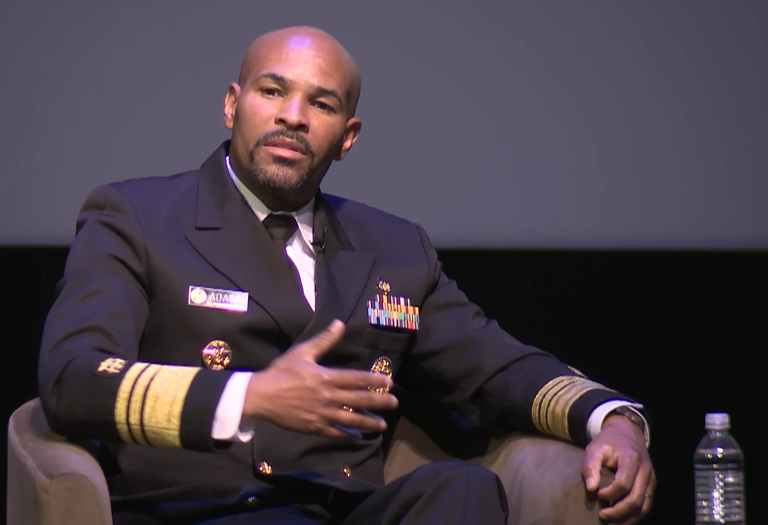
Jerome Adams, MD, who served as surgeon general during President Donald Trump’s first term, said the nation must rethink how it allocates mental health resources.
“We spend a disproportionate amount of our resources on diagnosis and treatment and not on prevention and wellness,” Adams said. “I think oftentimes that conversation comes at the expense of thinking about mental health, not as mental illness, but as mental wellness, and what can we do to create communities that are more supportive of our young people.”
Adams also raised concerns about emerging risks, including increasing marijuana potency and the explosion of online sports gambling, which he said are worsening addiction and mental health issues among young men.
Joycelyn Elders, MD, who served as surgeon general during the Clinton administration, called for simple, immediate steps parents and schools can take.
“That keeps the kids from being on the phone all night. … These are things that parents could do today,” Elders said, referencing tech-free zones and enforced screen-off times at night.
Elders also encouraged adults to create safe spaces for open dialogue and to recognize broader environmental factors affecting youth mental health, including poverty, gun violence, and exclusion.
“Our mental health is the most valuable resource we’ll ever have, and our children are at stake,” she said.
The Social Media Effect
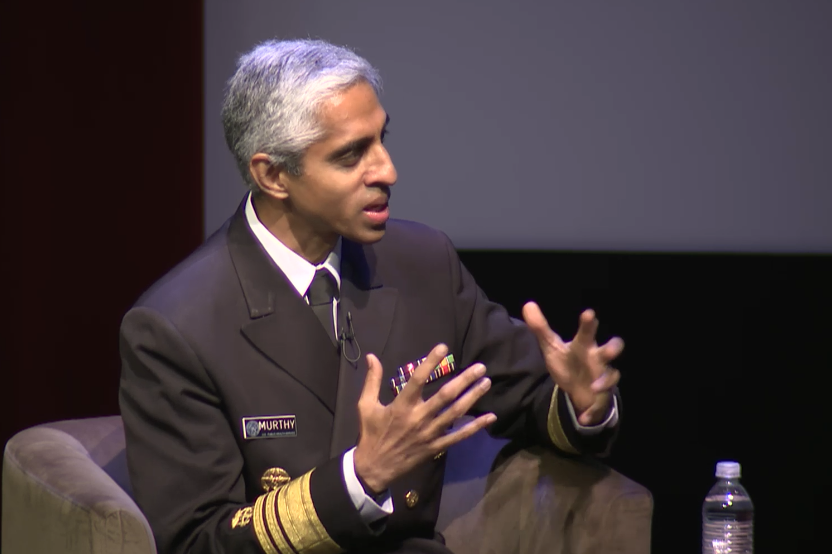
Former Surgeon General Vivek H. Murthy, MD, MBA, who served under both the Obama and Biden administrations, reinforced the link between excessive social media use and poor mental health outcomes.
“Adolescents who were using 3.5 hours a day or more of social media faced double the risk of anxiety and depression symptoms,” Murthy said. “And the average use today among adolescents is 4.8 hours. It’s well beyond that threshold.”
Murthy said there is currently no evidence proving social media is safe for minors and called for age-appropriate restrictions.
“Impulse control isn’t fully developed yet,” he said. “My belief is that delaying the use of social media until past early adolescence—until at least 16, and potentially later, depending on a child’s maturity—is eminently reasonable and advisable.”
He also warned that isolation and disconnection have become “an epidemic of loneliness,” noting that roughly half of young people struggle with loneliness.
“Loneliness is not only extraordinarily common—it’s also consequential,” Murthy said.
The Need for Accountability and Awareness
David Satcher, MD, PhD, who released the first Surgeon General’s Report on Mental Health in 1999, urged policymakers to confront stigma that still deters families from seeking care.
“Parents often neglect to seek care for their children due to embarrassment and fear that such a diagnosis might interfere with the child’s future,” Satcher said. “We must acknowledge and find ways to overcome the barriers of stigma.”
Satcher and other panelists also pointed to the shortage of mental health professionals and the need for expanded training opportunities.
Balancing Hope and Urgency
While the panelists agreed that social media has played a destructive role, they also acknowledged technology’s potential benefits—particularly in telehealth and predictive analytics.
“AI and the aggregated data and predictive analytics hold great hope when we look at the mental health challenges,” Carmona said.
The symposium drew hundreds of experts, students, and policymakers from across the globe, united by a shared goal of addressing what organizers described as a global turning point in youth well-being.
For some attendees, including medical students at Geisel, the opportunity to hear directly from former national health leaders was transformative.
“They stressed the importance of listening and intentionally addressing mental health interpersonally because of both its realistic application and effectiveness,” said Geisel student Ariana Stephens.
The weekend concluded with a message of cautious optimism.
“These are coordination problems,” said Pedro Conceição, director of the UNDP’s Human Development Report Office. “And coordination problems are much easier to solve and address, because we all want the same thing. So I think there is hope here.”
President Beilock pointed to recent campus survey data showing that the share of students at risk for moderate to severe depression dropped from 33% in 2021 to 24% in 2024, while those who believe Dartmouth prioritizes mental health rose from 44% to 73%.
“We still have significant work ahead,” Beilock said, “but we also have hope and evidence that we can identify the interventions that truly make a difference.”