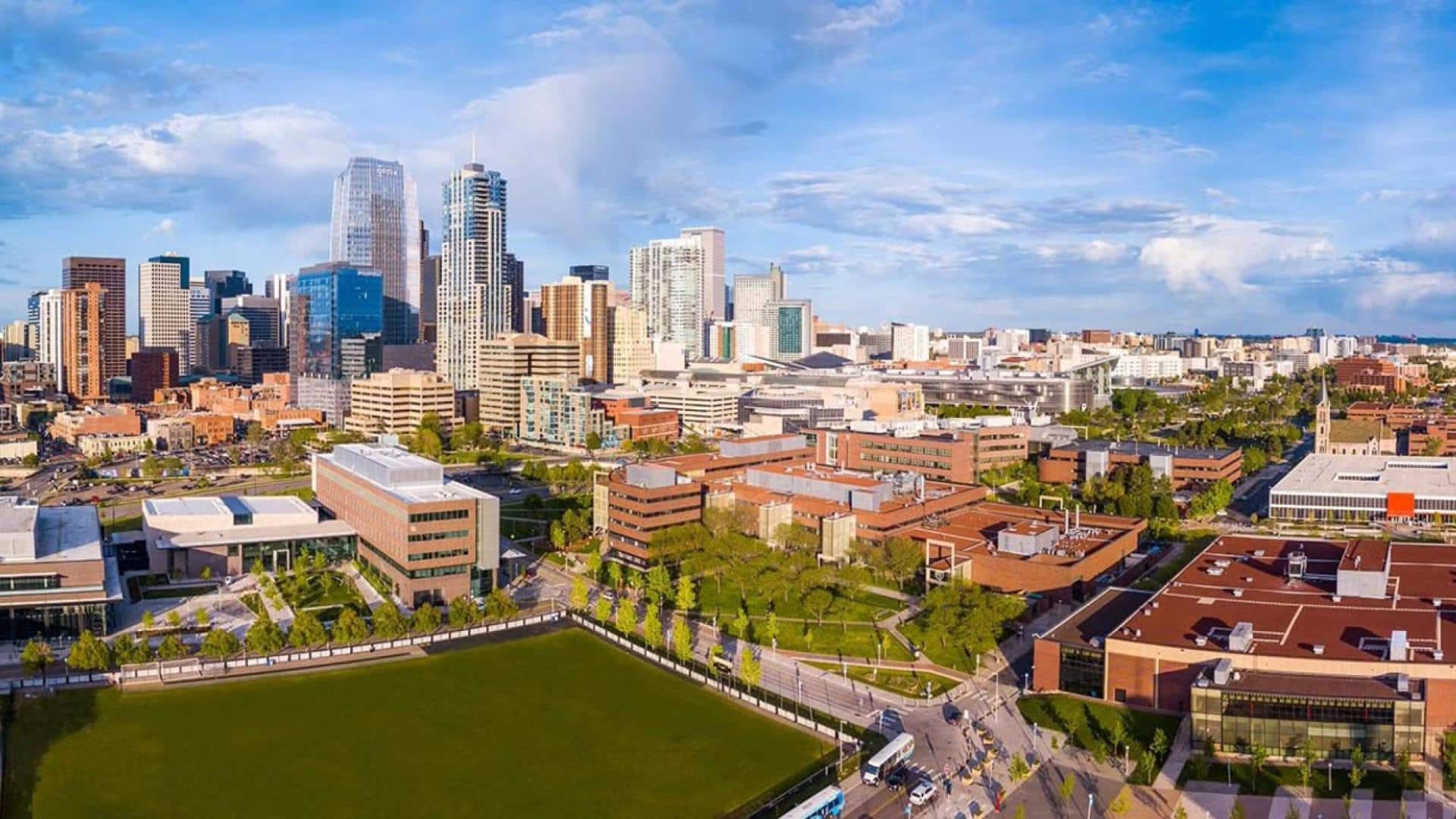
The University of Colorado Denver Business School is positioning itself at the center of Denver’s sustainability conversation with the launch of the Blair Gifford Mile High Sustainability Impact Challenge, a new annual competition designed to turn student ideas into implementable solutions for the city’s most urgent urban challenges.
Backed by a philanthropic gift from social entrepreneur and CU Denver Business School professor emeritus Blair Gifford, PhD, the challenge brings together students, local organizations, and public-sector partners to address issues ranging from climate resilience and water scarcity to housing affordability, mobility, and equitable access to green space. Rather than emphasizing theoretical exercises, the competition is structured to generate proposals that can realistically be piloted in downtown Denver.
The challenge officially kicked off in late January with an introductory event outlining expectations, resources, and the scope of sustainability issues facing the city.
In the weeks following, student teams began forming across disciplines and institutions, reflecting the program’s emphasis on collaboration between business and non-business fields such as urban planning, environmental studies, engineering, and public policy. Teams are required to partner with a local nonprofit, government office, or business and secure a letter of collaboration demonstrating that their ideas have real-world feasibility.
Organizers describe the competition as a signature initiative for the school’s Sustainable Business Program, designed to strengthen ties between the university and the City and County of Denver while giving students hands-on experience addressing place-based challenges. Projects must focus on downtown Denver and look ahead five years, requiring teams to identify specific locations—neighborhoods, corridors, or blocks—and develop proposals that balance environmental, social, and economic sustainability.
Focus areas for submissions include green infrastructure and climate resilience, sustainable transportation and mobility, circular economy and waste reduction, energy and building efficiency, and sustainable urban development. Teams may also explore how artificial intelligence can be applied to urban planning, energy management, and climate-impact modeling. Proposals are expected to include implementation strategies, cost estimates, financing approaches, and metrics for measuring success, moving well beyond conceptual visioning.
In addition to financial awards, the competition offers structured support. Faculty mentors and local subject matter experts are scheduled to lead capacity-building and feasibility workshops, helping teams refine ideas, test assumptions, and incorporate stakeholder input. Finalists will be invited to a pitch night in early May, where they will present proposals to judges and community leaders in a Shark Tank-style format.
Winning teams will receive cash prizes along with additional funding earmarked specifically for project implementation. Organizers say that pairing prize money with pilot support is central to the challenge’s goal of ensuring strong ideas do not stall after the competition ends.
By embedding sustainability, community impact, and economic viability into a single applied framework, the initiative reflects CU Denver’s broader mission as an urban public research university. For students and partners alike, it offers an opportunity to shape the future of downtown Denver—not just through ideas, but through action grounded in local collaboration and practical execution.