
Financial Wellness as a Retention Strategy | Basic Needs as Belonging | Rural and Community Health Workforce Pipelines | Philanthropy Steps Up | Spotting Trouble Early | HEED Award Champions | Institutions to Watch
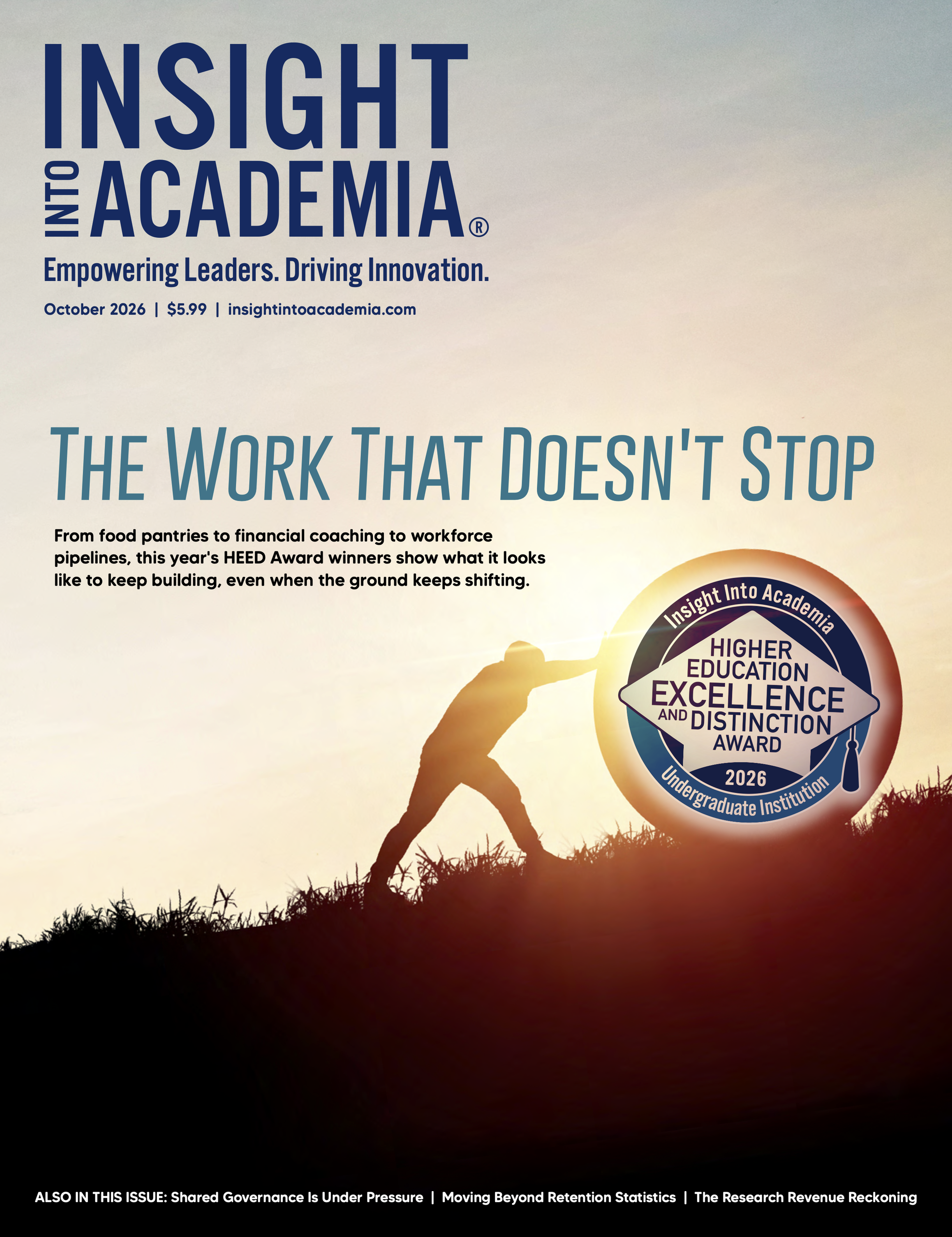
The 2026 Insight Into Academia Higher Education Excellence and Distinction (HEED) Award winners are proving that supporting students and employees optimally is a durable commitment.
For more than a decade, the HEED Award has recognized colleges and universities that treat academic excellence and community-building as inseparable—woven into recruitment, retention, hiring, policy, and the everyday experience of campus life. This year, that recognition arrives at a moment when higher education is navigating real headwinds. Budgets have tightened. Political and legislative scrutiny has intensified. Some institutions have had to defend or eliminate programs that, a few years ago, drew little attention. The question facing colleges and universities today isn’t whether student, employee, and local community success is worth investing in. It’s whether an institution can sustain that investment when the landscape around it keeps shifting.
Insight Into Academia is proud to present the recipients of the 2026 HEED Award, and include undergraduate, community college, health professions, and graduate and law school categories. We also honor HEED Champions, those institutions that are in the top tier of all HEED Award schools. They set the bar even higher.
Here we honor institutions that have built genuine, sustained strategies for student success, employee recruitment and retention, and campus environments where people thrive and do their best work. This year’s winners represent an extraordinary range of institution types, from small liberal arts colleges to large public flagships.
Some have built financial coaching and literacy programs directly into their retention strategy, treating a student’s understanding of their own finances as seriously as their academic advising. Others have made basic needs—food, housing, and emergency funds—a central pillar of campus life rather than a program tucked into a single office. Several are building health care workforce pipelines that begin in community colleges and rural high schools, training clinicians who understand the communities they will one day serve. A number are turning to philanthropy to sustain their work as public funding grows less predictable. And many are using data to identify struggling students before a difficult semester becomes a permanent gap.
“What distinguishes this year’s honorees is not the size of their budget or the scale of their name recognition, but their refusal to treat this work as optional,” says Lenore Pearlstein, co-publisher of Insight Into Academia. “These institutions have built real infrastructure around ensuring the success of the people on their campuses—how they recruit, how they retain, how they respond to student and employee needs. That kind of commitment doesn’t disappear when the environment gets harder. If anything, it gets even stronger.”
Selected for their innovative programming, ongoing dedication, and measurable impact, this year’s honorees offer models that can be adapted and replicated by institutions of every size and type. Through their stories, readers will find practical approaches, structural frameworks, and a clear picture of what it looks like when a campus decides that caring for its people is not just a program or initiative—it is the foundation upon which the institution is built.