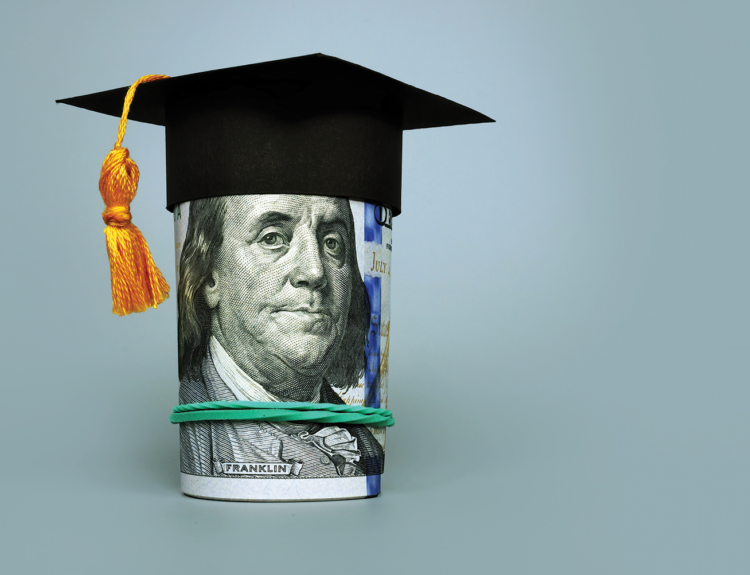
Ask most Americans whether college has become more or less affordable over the past decade, and they’ll almost certainly say less. They’d be wrong—or at least, that’s not what the data show.
A new analysis from the Brookings Institution finds that the net price of attending a four-year college or university has fallen across nearly every income level since 2019, and in some cases the declines stretch back a decade or more. The findings, based on data collected from federally mandated net price calculators at 200 institutions and supplemented by proprietary records from the nonprofit MyinTuition Corp., challenge the prevailing narrative that college is spiraling out of reach for ordinary families.
The disconnect between perception and reality comes down to one number that dominates public conversation: the sticker price. That figure—the full, published cost of attendance—is the most visible number associated with college costs, and it’s been climbing for decades. But few students actually pay it. What matters, the report argues, is the net price: tuition and fees after scholarships and grants are subtracted. And by that measure, college has gotten cheaper.
For students from families earning around $45,000 a year—roughly the 25th percentile of the income distribution—inflation-adjusted net prices have dropped between 15 and 30 percent since 2019 across all institution types studied. At elite private universities with very large endowments, the declines for lower-income students are even steeper. Administrative data from highly selective institutions show that net prices for students from families at that income level fell by about 35 percent over the past decade, with those students now paying an average of roughly $4,800 per year.


“While there may still be room to improve affordability, if anything the evidence suggests that college has, for the most part, become more affordable in the last decade,” the report’s author writes, adding that the findings “should not be read as minimizing the financial strain many families experience but rather as evidence that those strains are not being driven by rising college net prices.”
Middle-income families have seen similar trends. For students from households earning around $85,000, net prices declined by roughly 10 to 43 percent depending on the institution type, with the largest drops at highly selective privates. Even higher-income families — those earning $140,000 or more — are paying less today, in inflation-adjusted terms, than they were six years ago, though their prices have largely leveled off in recent years.
The picture is more complicated for public flagship and research-intensive universities, where students from families at the 75th and 90th percentiles have seen slight price increases over the past couple of years. That pattern likely reflects a modest pullback in merit aid rather than any structural shift, the report notes.
Meanwhile, even sticker prices are lower today in real terms than they were in 2019–20, a counterintuitive finding that reflects the inflation surge of 2022 and 2023, during which posted tuition increases didn’t keep pace with the broader cost of living.
None of this erases genuine affordability concerns. A family earning $45,000 a year still faces an average net price of around $15,000 annually at public institutions — a significant burden. But the report draws a careful distinction: affordability may be inadequate without being in decline. And for most students, the trajectory over the past decade has been pointing in the right direction, even if the public’s perception hasn’t caught up.