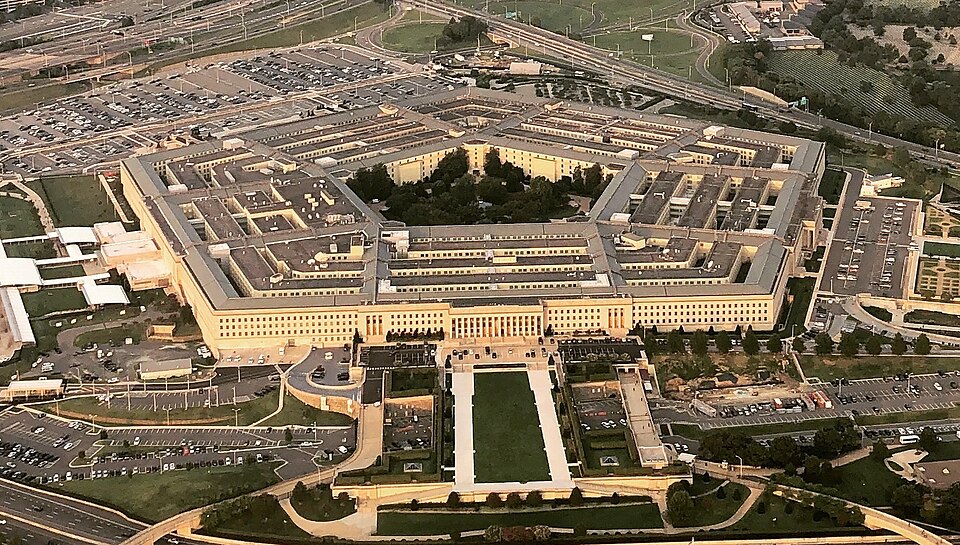
The Pentagon announced Friday it is terminating 93 Senior Service College fellowship programs across 22 universities and institutions, pulling military officers from graduate programs at some of the country’s most prestigious schools in what Defense Secretary Pete Hegseth described as a realignment of military education with “American values.”
The fellowships, which place senior military officers in civilian graduate programs as a form of professional development, have long been considered a bridge between the armed forces and the broader intellectual community. That bridge is now being dismantled — at least at the elite end.
Harvard University bore the brunt of the cuts, losing 21 fellowships. The decision was hardly a surprise: earlier this month, the Department of Defense—which the administration has nominally rebranded as the “Department of War,” though the legal has not changed—announced it was severing all academic ties with Harvard entirely. Friday’s memo extended that logic across a much wider swath of higher education. Also affected were MIT (7 fellowships), Tufts (6), Georgetown (6), Carnegie Mellon (5), Brown (4), Columbia (3), Yale (2), and Princeton (1), along with several prominent Washington policy institutions including the Brookings Institution, the Council on Foreign Relations, and the Atlantic Council.
In a video posted to X, Hegseth framed the cuts in stark terms, calling elite universities “woke breeding grounds of toxic indoctrination” and accusing them of becoming “factories of anti-American resentment and military disdain.” The official Pentagon memorandum was somewhat more measured in its phrasing, stating that the department “will no longer invest in institutions that fail to sharpen our leaders’ warfighting capabilities or that undermine the very values they are sworn to defend.”
The policy takes effect with the 2026–27 academic year. Officers currently enrolled in affected programs will be permitted to finish their coursework.
In place of the canceled partnerships, the Pentagon released a list of potential new partner institutions including Liberty University, Hillsdale College, Regent University, The Citadel, and Pepperdine University, alongside larger public institutions such as the University of Florida, Arizona State, and Clemson. The department said prospective partners would be evaluated on criteria including “intellectual freedom, minimal relationships with adversaries, minimal public expressions in opposition to the Department, and Graduate-level National Security, International Affairs, and/or Public Policy Programs.”
That last criterion—”minimal public expressions in opposition to the Department”—raised eyebrows. Critics argue it effectively creates a loyalty test for universities seeking federal educational partnerships, a significant departure from norms that have governed military-civilian academic exchange for decades.
Hegseth himself holds degrees from both Princeton and Harvard—two of the institutions he is now cutting off.
Supporters of the move contend that internal military institutions and more affordable public universities can provide equivalent professional development at lower cost and without what they see as ideological contamination. Critics counter that the fellowships were never simply about academic credentials—they were designed to expose senior officers to diverse intellectual environments and build relationships across sectors that have historically informed strategic thinking at the highest levels.
What remains unclear is how the policy will be implemented in detail: whether any ambiguity exists around programs already in the pipeline, how the Pentagon will define qualifying partnerships going forward, and whether the current list of canceled institutions represents the end of the review or the beginning of a broader purge. Hegseth has signaled that a “top-to-bottom review” of the war colleges is also underway.
The move fits a now-familiar pattern for the Trump administration—using federal funding and institutional access as leverage against universities it views as politically hostile, with Hegseth serving as the point of the spear in higher education’s ongoing confrontation with Washington.