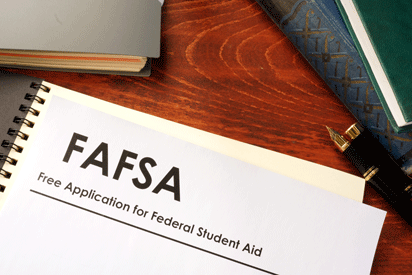
The 2027-28 Free Application for Federal Student Aid (FAFSA) went live Wednesday, the earliest launch in the program’s history. It is the second straight year the Education Department has opened the form ahead of the Oct. 1 federal deadline. Last year’s form opened on Sept. 24.
“We are incredibly proud to launch the earliest FAFSA form in our nation’s history,” Education Secretary Linda McMahon said in a statement.
Under Secretary of Education Nicholas Kent told ABC News the form is quicker to complete than past versions. “We’ve simplified it,” Kent said. “Instead of it taking hours or even days to fill out, it takes 15 minutes on average.”
This cycle’s changes include rewritten questions and instructions meant to cut down on jargon. Students can also now invite a parent or other contributor by text message as well as email. Later this fall, returning students will see their information pre-filled from earlier applications, according to the department.

The new features add to changes made last cycle. Those include real-time estimates of Pell Grant eligibility and a tool that shows whether graduates of a given college earn less than high school graduates. The department also says its fraud-detection efforts have saved taxpayers more than $2 billion since January 2025.
Kent urged families to apply. “We don’t want students leaving money on the table,” he said.
The early launch follows several difficult years for the FAFSA. The overhaul required by the FAFSA Simplification Act of 2020 was passed in the final weeks of Trump’s first term. It was carried out under the Biden administration, and the redesigned form’s 2023 rollout was severely delayed. Those delays left schools and students scrambling to calculate aid packages in time. Congress later set a hard Oct. 1 launch deadline.
The Trump administration has made the smoother rollout a political talking point. Its press release blames “gross mismanagement” by the previous administration. Higher education experts told ABC News that efforts to simplify the FAFSA have been bipartisan and “incremental” for more than a decade.
A faster form does not make college cheaper, and the launch comes amid other administration changes to how students pay for school. This summer the administration reduced the number of federal student loan repayment plans and imposed new borrowing limits, affecting millions of people. Critics argue that the new caps will mean higher monthly payments for some borrowers, especially lower-income ones. The department says the limits have curbed excessive borrowing and pushed some institutions to lower their costs.
Public frustration over prices remains high. A September 2025 Pew Research Center poll found that 60% of U.S. adults said colleges were doing a poor job of keeping tuition affordable.
Kyla Hurns, a higher education policy analyst at The Education Trust, told ABC News that fixing the form is only part of the solution. “While it’s super important to fix the FAFSA as a form, it only truly can achieve its goal of allowing every American to choose the pathway that works best for them if Pell Grant keeps up with inflation,” Hurns told ABC News.
For many families, she added, federal aid now covers far less of the bill. “It’s not funding all of the kids’ education anymore,” she said.