
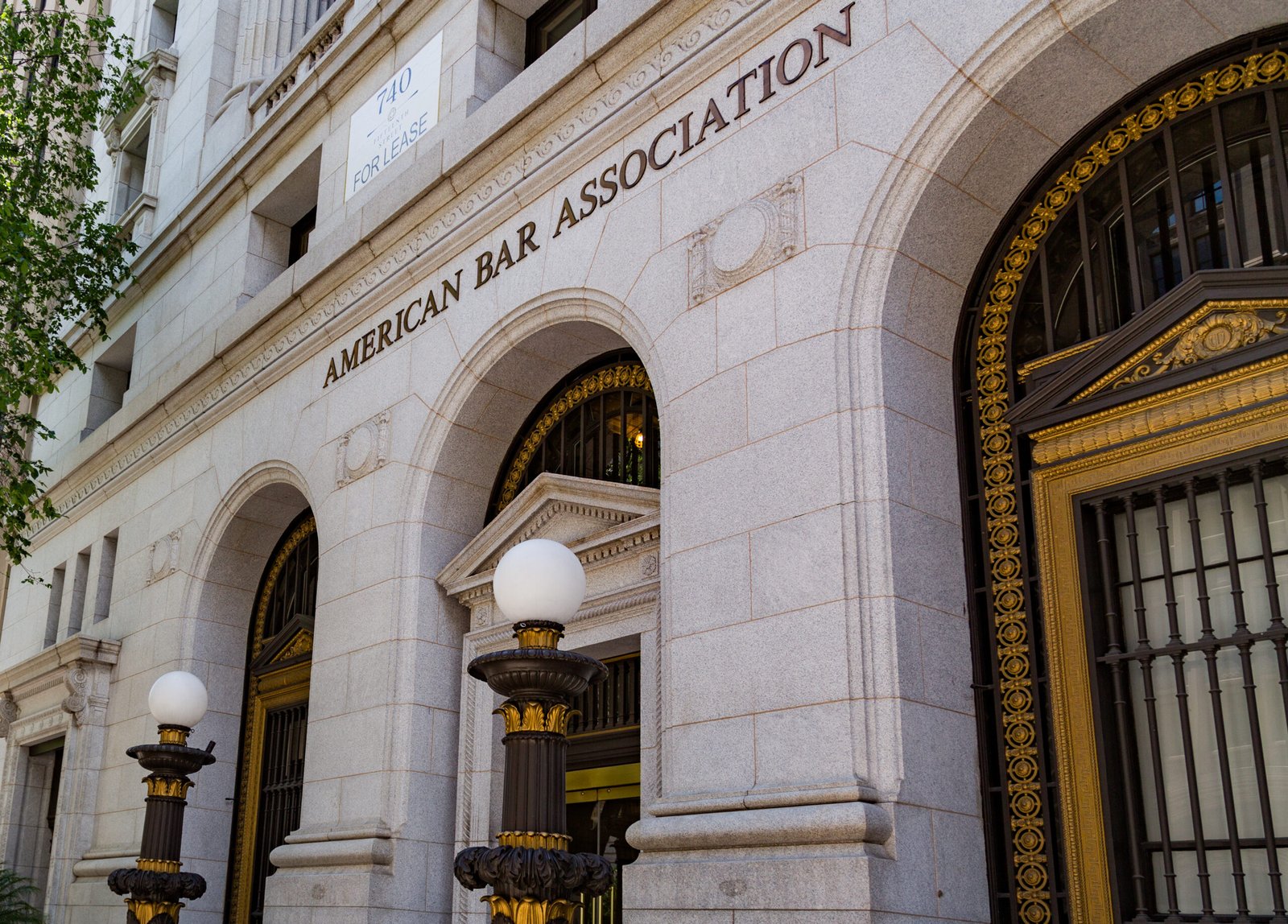
For more than a century, the American Bar Association (ABA) has served as the de facto gatekeeper of American legal education. That arrangement is now unraveling at a pace that would have seemed unimaginable just two years ago, as a growing number of states move to sideline the organization from their bar licensing processes—a shift driven in large part by the federal government’s crackdown on diversity, equity, and inclusion (DEI) requirements that advocates say have been essential to broadening access to the legal profession.
The latest development came in late May, when the Supreme Court of Ohio announced it would publish proposed rule amendments allowing graduates of non-ABA-accredited law schools to sit for the Ohio Bar, while simultaneously directing its administrative director to begin building a state-run accreditation process.
Chief Justice Sharon L. Kennedy framed the move as collaborative rather than combative. “We remain committed to supporting our law schools and ensuring their perspectives are reflected in this process,” she says in a statement. “This effort took coordination across all levels of government, incorporating essential input from state law schools, state legislators, and federal legislators.”
Ohio is far from alone. Texas became the first state to formally sever its reliance on the ABA when its supreme court finalized a new approval system in January. Florida and Alabama have similarly restructured their licensing rules, and Washington State announced in May that it will begin allowing graduates of non-ABA-accredited schools to sit for its bar exam starting in September.


The Washington State Bar Association was careful to note it is not trying to “denigrate the ABA accreditation process,” saying instead it is “honoring the ABA accreditation process while eliminating unnecessary barriers to the legal profession.”
The ABA’s managing director of accreditation, Jenn Rosato Perea, has sought to minimize the significance of the departures, saying Washington’s change does not “substantively affect the current national accreditation system.” But the cumulative weight of state-level defections tells a more complicated story.
At the center of the turbulence is DEI. The ABA’s Standard 206, which required law schools to demonstrate concrete commitments to diversity in admissions, recruitment, and programming, has been suspended since February 2025 under pressure from the Trump administration, which called the requirement unlawful in light of the Supreme Court’s 2023 decision in Students for Fair Admissions v. Harvard.
In May, the ABA’s accreditation council voted to eliminate the standard entirely—a move that one council member, David Brennen, a former dean of the University of Kentucky College of Law, defended reluctantly.
“Even though I personally agree with [the diversity and inclusion standard] and what it tries to achieve,” Brennen says, “I think it’s appropriate as an accrediting body that we eliminate that standard so we don’t inhibit the diversity of ideas out there in various types of legal education environments.”
For supporters of DEI in legal education, the rollback represents a serious blow. The diversity standard had served for decades as a lever for increasing representation of women and people of color in the profession. Its elimination, critics argue, removes one of the few structural mechanisms available to law schools for building more equitable student bodies and faculties.
The ABA received substantial public comment urging it to retain or strengthen the rule—mostly from legal educators—before a key committee recommended elimination as the price of preserving the organization’s federal accreditor status.
The practical consequences for law schools in states that have moved away from the ABA remain uncertain. Supporters of a national accreditation system warn of “portability chaos,” a scenario in which graduates of schools approved in one state find themselves unable to practice in another.
Patricia Salkin and Gabrielle Rosenblum, writing for the New York State Bar Association, noted that employers may grow increasingly selective about which schools they recruit from, and prospective students may face difficult choices about where to enroll based on where they ultimately want to practice.
Others see the disruption as long overdue. Critics of the ABA’s model have argued for years that its requirements drive up tuition and limit innovation, effectively pricing many aspiring lawyers out of the profession—the very access-to-justice problem that DEI advocates have sought to address through diversity mandates.
What is clear is that the decentralization now underway will reshape legal education in ways that are still difficult to predict. As Ohio, Tennessee, and other states continue weighing their options, the patchwork of state-by-state standards grows more complex—and the national uniformity that the ABA’s accreditation system once provided grows harder to reconstruct.