
Faculty Exodus Is Real. Here’s How to Fix It.
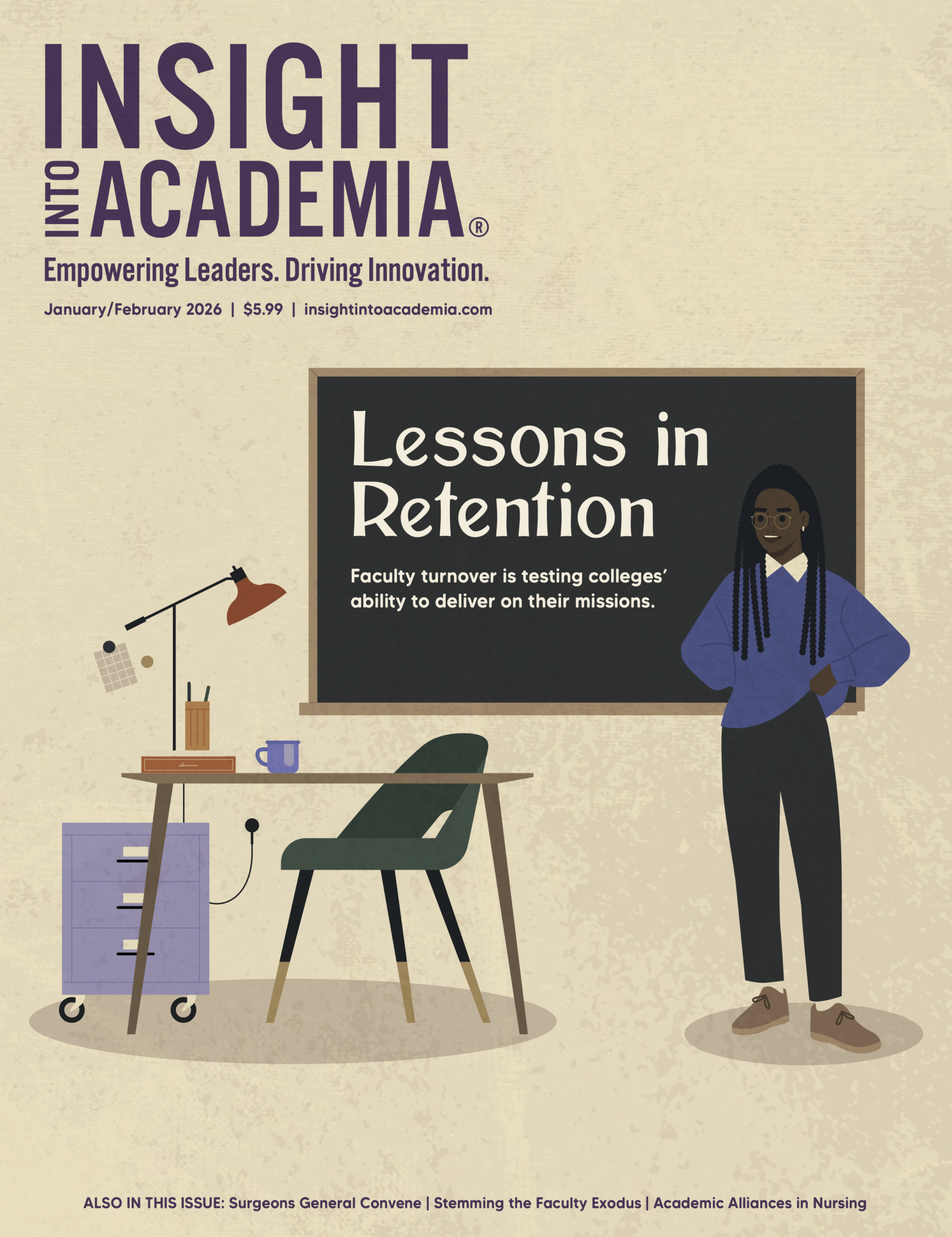
Faculty turnover is testing colleges’ ability to deliver on their missions. Recent reporting and data point to a common trio of drivers: noncompetitive pay, thin institutional support—especially for heavy teaching roles—and a fraying sense of belonging.
Case studies from Loyola University New Orleans and Iowa’s public universities, along with new findings from academic medicine, illustrate both the scope of the problem and a path forward.
Pay and Support Gaps Undermine Continuity
At Loyola University New Orleans, faculty concerns about compensation and workload have reached a tipping point, according to The Maroon, the school’s student newspaper.
The publication reports that President Xavier Cole has identified pay and retention as priorities in a five-year plan, and that faculty senate leaders have flagged salary gaps compared with peer institutions—particularly in law and arts and sciences—as an urgent concern.



Faculty discussions also highlighted how sustained underinvestment can ripple across departments. Departures increase teaching loads, reduce time for research, and make it harder to sustain a rigorous core curriculum.
In the nursing program, for example, a lack of competitive salaries has already contributed to the loss of experienced educators.
Non-tenure-track and part-time instructors, who carry substantial instructional loads, were described as having limited time and resources to pursue scholarship—an imbalance that fuels burnout and exit decisions.
The through line in Loyola’s debate is continuity. When institutions cannot compete on pay or protect time for the scholarly work that underwrites strong teaching, they lose not only individual employees but also mentoring capacity, institutional memory, and course stability that students experience day to day.
Measuring Faculty Discontent
Across higher education, faculty and staff discontent has reached a tipping point, and new national data show how widespread the problem has become.
According to the Viewfinder® National Campus Climate Data Center, which aggregates responses from more than 90,000 college employees nationwide, low pay, heavy workloads, and perceptions of unfair treatment are among the strongest predictors of dissatisfaction.
Key findings include:
- 61.6% of faculty and 63.4% of staff say they are underpaid.
- Two-thirds of employees report persistent pay disparities.
- 49% of tenured and tenure-track faculty say expectations are too high.
- 59% of tenured or tenure-track faculty report overly heavy workloads.
- Only 38% believe their institution adequately funds professional development.
Perceptions of inequity also remain high: 45% of staff say merit and promotion systems are unfair, and more than four in 10 tenured faculty believe professional standards are applied inconsistently.
The NCCDC team recommends regular pay and workload assessments, transparent promotion processes, and expanded funding for professional growth to rebuild morale and retention.
Explore NCCDC findings:
campusclimatesurveys.com/national-campus-climate-data
Tenure’s Erosion and Resignations Raise the Stakes
Iowa’s public universities are experiencing a similar challenge.
A Board of Regents report cited by The Gazette shows the number of tenured faculty across the University of Iowa, Iowa State University, and the University of Northern Iowa has fallen to 2,333—its lowest level in decades and a 21% decline since 1998.
During the 2023 budget year, the regents reported a record 186 resignations, including 93 tenured or tenure-track faculty departures.
Legislative scrutiny has intensified pressure, with proposals to expand post-tenure review and restrict certain campus initiatives. That climate complicates recruiting and retention, particularly as institutions rely more heavily on non-tenure-track roles with limited job security.
Even amid these pressures, regents have articulated why tenure remains central to institutional quality.
“The goal of tenure is to ensure academic freedom to innovate, create, and engage in explorations that advance knowledge,” a statement from the Regents reads. “Iowa’s public universities want faculty who create, innovate, push boundaries, and take risks in ways that result in progress across many different fields of study.”
Those protections—and the research and grant activity they enable—are difficult to sustain when experienced scholars leave faster than campuses can replace them.
Belonging Is a Powerful Predictor of Who Stays
Compensation and job security are not the only levers institutions can pull.
A research letter in JAMA Network Open analyzed responses from 15,915 faculty across 26 U.S. medical schools and found that those who reported dissatisfaction with department-level belonging were seven times more likely to leave within two years.
“People seek environments and connections to people, places, and things where they feel a sense of belonging—a basic human need,” wrote Julie Kathleen Silver, MD, and her colleagues. “Medical schools should design and implement programs that enhance belonging.”
The researchers define belonging as the belief that one is a valued and fundamental part of their environment.
The pattern held across demographic groups, with particularly stark disparities for women and faculty from racially and ethnically minoritized backgrounds.
What Retention Looks Like in Practice
Together, these cases and data point to a playbook of strategies institutions can act on now:
- Benchmark and fund competitive pay. Tie compensation to clear peer comparisons and cost-of-living realities. Prioritize equity adjustments in departments with the widest gaps and make salary progress visible to rebuild trust.
- Rebalance workloads and protect time for scholarship. Cap course loads at sustainable levels, fund course releases linked to research or program development, and ensure faculty with heavy teaching portfolios have pathways for growth.
- Invest in academic freedom and employment security. Reaffirm tenure’s role in innovation and student learning. Where non-tenure-track roles are essential, expand multiyear appointments and transparent promotion ladders.
- Build belonging at the department level. Train chairs in inclusive leadership, establish mentoring networks, and use pulse surveys to identify climate concerns—especially among women and underrepresented faculty.
- Strengthen pipelines and continuity. Budget for overlap hires and interim coverage when departures occur, and communicate timelines clearly so students and remaining faculty are not left guessing.
Ultimately, retention is a test of institutional priorities.
The reporting from Loyola shows how compensation and support decisions echo through classrooms and labs. The Iowa data quantify the cost when tenure erodes and resignations mount. And the medical-school research underscores that culture—specifically, whether people feel they belong—can make or break a career decision.
The solution is sustained alignment of pay, policy, and climate with the values institutions claim to hold: fostering discovery, delivering excellent teaching, and serving the public good.