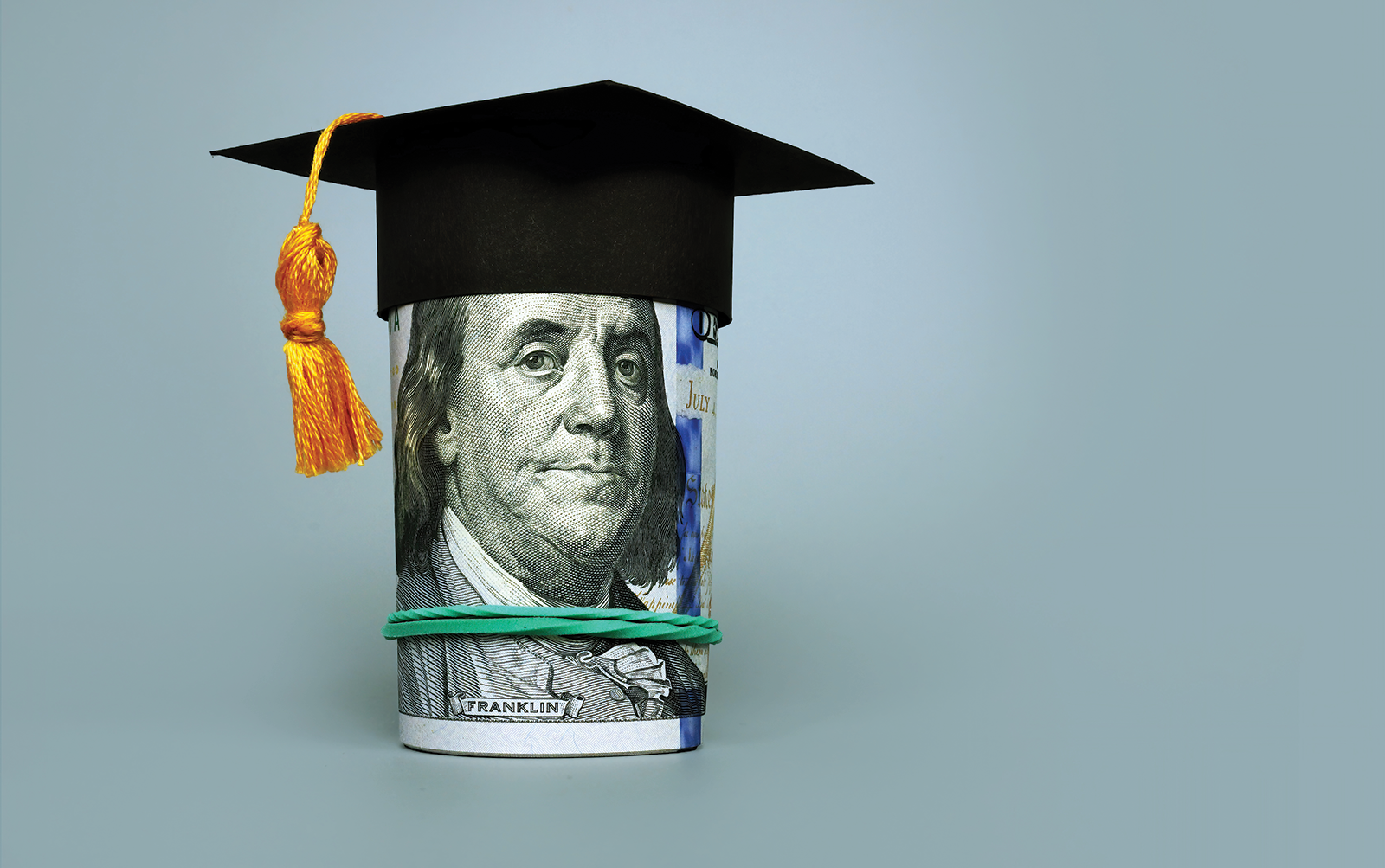
Americans have made up their minds about one thing when it comes to higher education: it costs too much. A new survey from Gallup and the Lumina Foundation finds that only 12% of U.S. adults think four-year colleges and universities are doing a good or excellent job of providing an affordable education, while 63% say they’re doing a poor job — by far the worst rating of any attribute the survey measured, worse than marks for teaching quality, workforce readiness or free speech on campus.
The June 1-15 survey is part of a broader Lumina-Gallup research effort that has tracked more than 14,000 adults without a four-year degree, along with nearly 6,000 college graduates and 2,000 employers, since 2020. This year’s installment paints a picture of a public that still values higher education in the abstract but increasingly doubts it can actually reach it. Just 25% of adults without a degree say most Americans have access to a quality, affordable education after high school — down 10 percentage points since 2023 and the lowest share recorded since 2022.
That skepticism cuts across the usual political divides. While Democrats and Republicans differ sharply on how they rate four-year colleges for things like teaching quality or free speech — gaps of 30 to 48 percentage points — affordability is one of the few measures where the two camps agree. Just 14% of Democrats and 5% of Republicans said colleges are doing a good job keeping costs down.
Two-year colleges fare far better in the same survey. Fifty-four percent of respondents rated community colleges positively on affordability, and 68% praised their accessibility — the only area where four-year schools scored higher was in “advancing knowledge” and research.
Financial pressure clearly shapes real decisions, not just opinions. Among parents of children under 18 who say they don’t want their child to attend a four-year college, the single most common reason, cited by a third of respondents, is that it’s simply “too expensive or not affordable.” Another 11% pointed specifically to the fear of accumulating student debt.
The financial toll doesn’t end at graduation, either, according to the companion Lumina-Gallup State of Higher Education 2026 report, which surveyed a broader pool of more than 14,000 adults. More than half of bachelor’s degree holders with outstanding loans — and about half of associate degree holders — say they’ve delayed a major life decision, such as buying a home, saving for retirement or having children, because of student debt. Notably, the report found that even relatively small loan balances carry consequences: roughly a third of graduates who borrowed less than $10,000 say that debt has still forced them to put off at least one major milestone.
Despite all this, Americans haven’t given up on the idea of college. Nearly three in four parents surveyed by Gallup still want their child to pursue some kind of education after high school, and 38% specifically hope their child will attend a four-year institution. And when asked who should be responsible for fixing the affordability problem, the public overwhelmingly points away from students and families and toward the institutions themselves: 76% named individual colleges among the three parties most responsible for controlling costs, followed by state governments (73%) and the federal government (67%). Only 24% put that responsibility on students and their families.
“Americans haven’t lost faith in the value of college, but they’re increasingly unsure they can afford to take part,” said Courtney Brown, Lumina’s vice president of impact and planning, calling the disconnect between belief and access “a wake-up call” for the sector.