Adaptive Student Athletes Require More Support
When Stanford University sprinter Sydney Barta sustained a stress fracture in 2024, the injury itself was not unusual. Those types of breaks are common among runners. What made Barta’s treatment more complicated was that she fractured her only biological foot.
Barta, a 2021 Paralympian and the first amputee to compete on Stanford’s varsity track and field team, runs with a specialized prosthesis. The asymmetry places additional force on her biological ankle and knee, particularly when she slows down. Her experience illustrates a gap emerging across higher education: student athletes with disabilities are competing at increasingly greater levels, but the campus systems needed to support them are not always designed for their disability.
A recent Stanford Medicine examination of adaptive sports medicine found that athletes competing in the Paralympic Games experience more than twice as many injuries as athletes in the Olympic Games. The risks vary according to their disability, adaptive equipment, and sport, making individualized care essential.


For colleges, adaptive athletics represents both a student access responsibility and a research frontier. Closing the gap will require trained clinicians, usable facilities, specialized equipment, inclusive emergency protocols, and sustained institutional investment.
Different Athletes, Different Risks
Adaptive athletes are not a single clinical population, and equal access does not mean identical care.
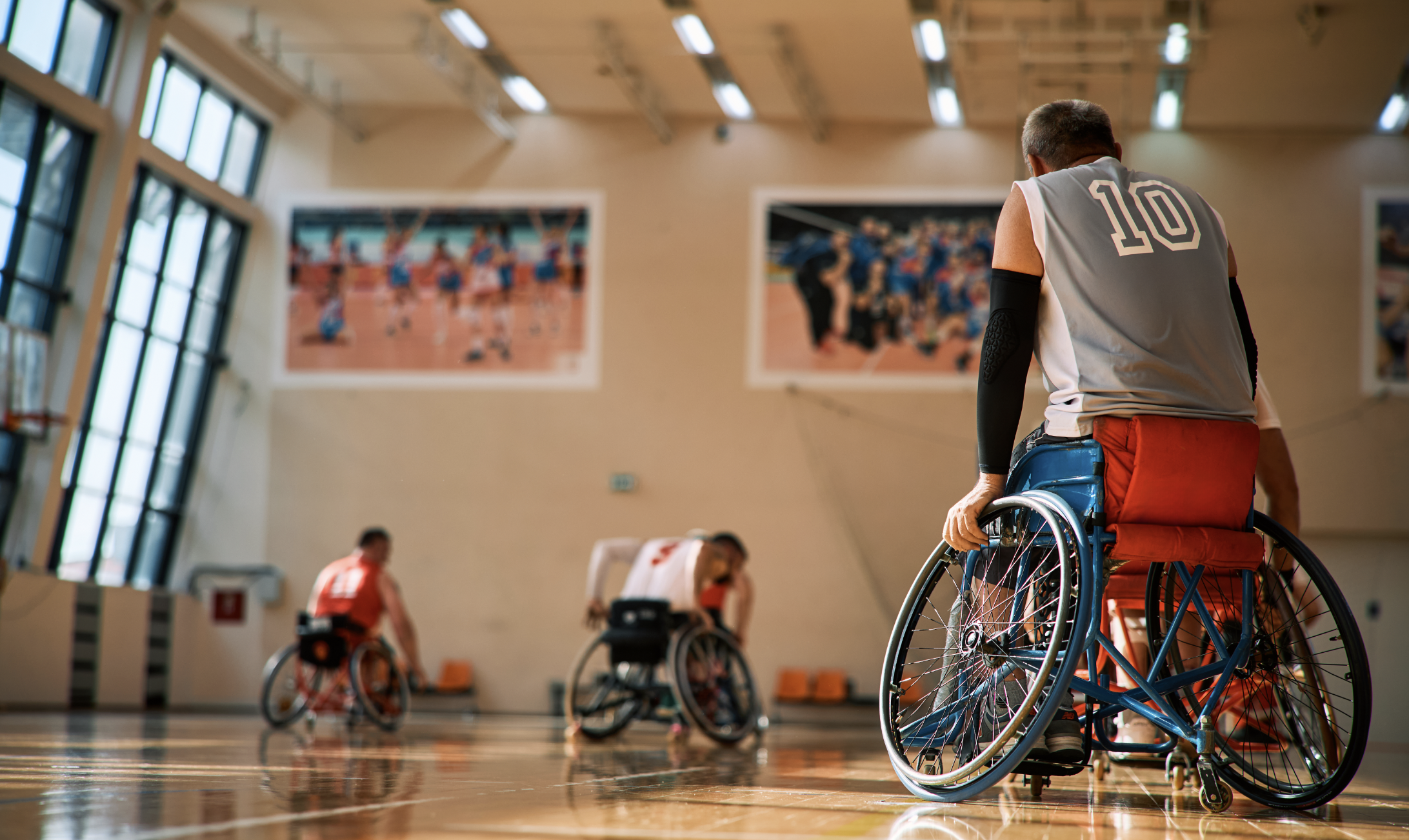
Student athletes who use wheelchairs may experience increased shoulder strain because their upper bodies power both athletic performance and daily mobility. Those using prostheses can develop blisters, pressure injuries, or skin breakdown where their bodies meet their equipment. Competitors with spinal cord injuries may have difficulty regulating body temperature, potentially turning a hot weather event into a medical emergency. Athletes with visual impairments can also face distinct injury patterns, including a heightened risk of head injuries.
These differences complicate familiar college sports medicine practices. A preseason evaluation may need to address prosthetic fit, skin integrity, pressure relief, wheelchair propulsion, heat regulation, or the health of an athlete’s unaffected joints. Emergency plans may need to account for impaired sensation, autonomic dysfunction, communication differences, and the safe handling of mobility equipment.
Without clinicians trained to recognize these risks, injuries may be missed or treated without addressing their underlying causes.
Infrastructure Is Part of Care
Clinical expertise cannot overcome a facility a student athlete cannot fully use. Federal standards require accessible routes to sports fields and activity areas. Accessibility requirements also cover spaces such as locker rooms, swimming pools, seating areas, and other areas of athletic facilities. Yet, technical compliance establishes a minimum. It does not necessarily mean a student athlete can independently enter a training room, transfer onto an examination table, use strength equipment, access recovery spaces, or evacuate safely during an emergency.
A meaningful accessibility review should follow them through their entire experience, from transportation and parking to training, competition, treatment, recovery, and departure. Athletes with disabilities should participate in that review because they are often best positioned to identify barriers that remain invisible on architectural plans.
Equipment requires the same sustained attention. Racing chairs, sport wheelchairs, specialized prostheses, transfer devices, and adapted strength equipment can be costly. Without recurring equipment and maintenance budgets, programs may depend on athletes providing their own gear, private fundraising, or temporary grants. A technically available program can remain functionally inaccessible when students cannot afford the equipment needed to participate.
A Research Frontier
Adaptive athletics also creates opportunities for interdisciplinary research. Questions involving prosthetic design, wheelchair propulsion, movement asymmetry, pressure-injury prevention, temperature regulation, and rehabilitation can cross the boundaries of medicine, engineering, biomechanics, and data science.
Research conducted with these athletes can improve performance and injury prevention, but institutions must ensure that they benefit from the work. Studies should include informed consent, privacy protections, appropriate clinical oversight, and meaningful participation to determine which problems researchers need to solve.
Models for Campus Integration
Stanford University is building adaptive sports into clinician education. Its nonoperative sports medicine fellowship includes a weekly adaptive sports program along with training in biomechanics, injury prevention, and musculoskeletal care. This model helps clinicians develop relevant expertise during training, rather than scrambling to acquire it after an athlete arrives on campus.
The University of Illinois Urbana-Champaign offers another model. Its wheelchair athletics program, housed within the Division of Disability Resources and Educational Services, draws on more than 70 years of experience. The university connects collegiate competition with wheelchair sport science, physical therapy, transportation, and environmental accessibility.
At the University of Michigan, the Adaptive Sports and Fitness program combines research, student engagement, community partnerships, and educational programming. Its goals include increasing awareness, access, knowledge, and participation among people with and without disabilities. That structure positions adaptive athletics as a campuswide endeavor rather than an isolated service.
These programs demonstrate that meaningful inclusion requires coordination among athletics, disability services, sports medicine, rehabilitation, recreation, engineering, and academic researchers.
Recruitment should follow that investment. Inviting students with disabilities to campus before facilities, staffing, equipment, and emergency plans are ready risks offering visibility without meaningful opportunity.
The strongest programs treat adaptive athletics as neither a charitable project nor a separate corner of campus recreation. They recognize it as an access obligation, a competitive opportunity, and a field capable of advancing research and clinical care.
The measure of inclusion is not whether an athlete with a disability can enter the facility. It’s whether that athlete can train, compete, recover, and belong there.