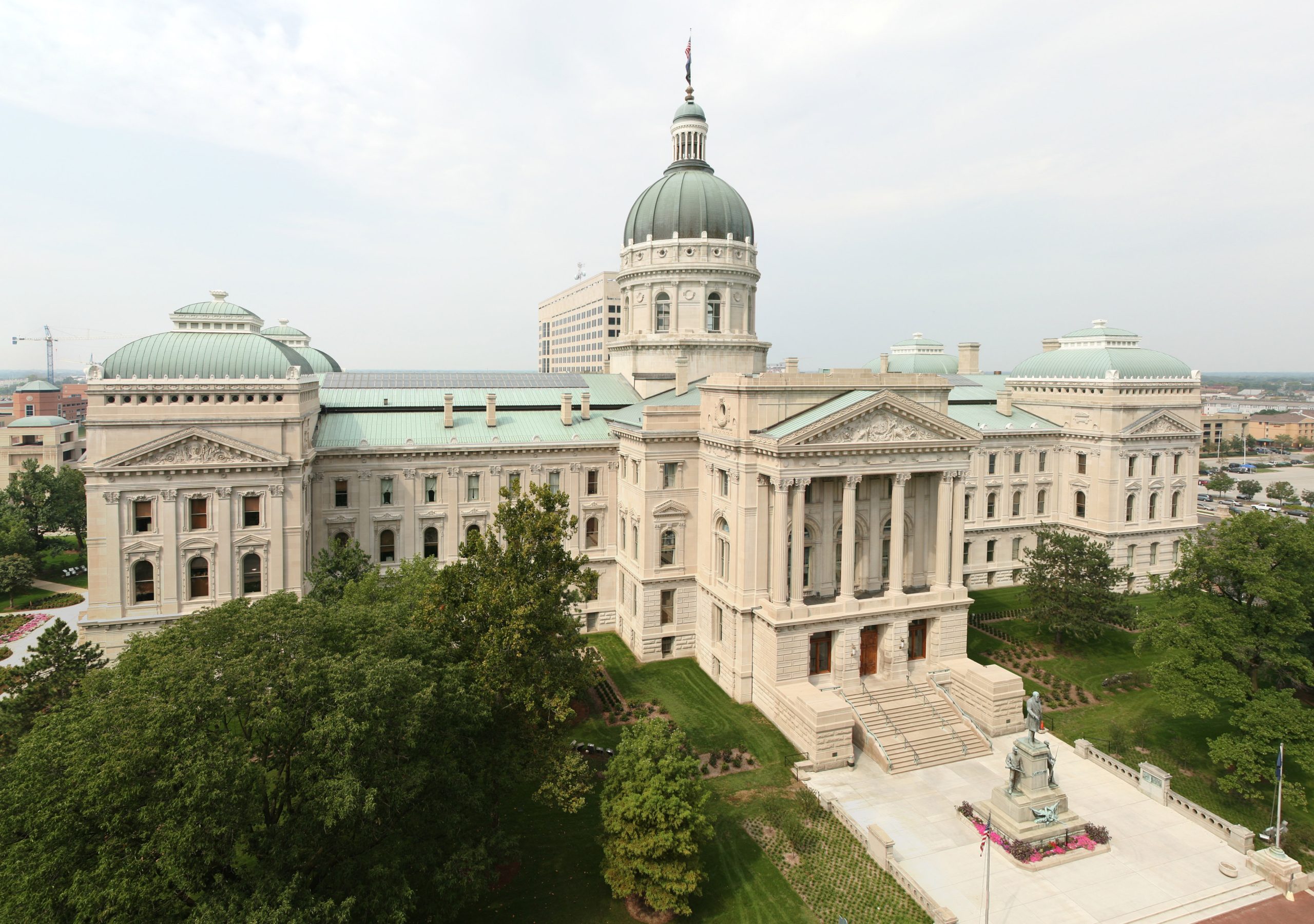
Indiana lawmakers are advancing legislation that would give the state expanded authority to review and potentially eliminate public college degree programs based on graduates’ earnings, raising new questions about how academic value is defined and who sets the parameters.
Senate Bill 199 would require state officials to identify “low earning outcome programs” at Indiana’s public institutions and could compel campuses to discontinue programs whose graduates earn less than high school diploma holders several years after completion, according to federal data. In Indiana, that benchmark is expected to fall somewhere between roughly $24,000 and $35,000 annually, though the final threshold has not been confirmed.
The bill passed the House in a 67–28 vote and now returns to the Senate for final action. It combines the higher education provisions with restrictions on minors’ access to certain social media platforms, an unusual pairing that has complicated debate at the Statehouse.
Supporters have framed the proposal as a response to student loan debt and concerns that some degrees do not lead to sustainable wages. Rep. Jim Lucas, R-Seymour, linked the measure directly to financial accountability, saying, “We have a student loan crisis in this country. If we can give students better information and keep them from taking on debt for a degree that doesn’t lead to a sustainable wage, then we ought to do that.”

House sponsor Rep. Bob Behning, R-Indianapolis, has emphasized that programs falling below the federal earnings benchmark “might get cut,” and said “the whole focus is trying to help students understand that investing in higher ed … what they study could affect their income/earnings.” Republicans backing the bill argue that the state has a responsibility to ensure public dollars and student borrowing are aligned with economic outcomes.
Democrats have largely supported the social media components of the bill but opposed what they describe as legislative intrusion into university governance. Rep. Ed DeLaney, D-Indianapolis, said students should not be limited by lawmakers’ judgments about career paths. “They should not be told by the state that they can’t learn this,” DeLaney said. “Not everyone goes to college for a specific career — many go there to find their career.”
Rep. Matt Pierce, D-Bloomington, questioned why the legislature was stepping in when university trustees are already appointed by the governor. “I don’t understand why we’re not trusting the trustees who are completely appointed — at least at IU — by the governor,” he said. “The governor controls a majority of the trustees … and yet we have to continually micromanage … and most of the time we don’t even know what we’re doing.”
Other Democrats warned that humanities disciplines could be disproportionately affected. During debate, Rep. Renee Pack, D-Indianapolis, criticized the earnings-based approach, saying, “I didn’t know that in the legislature, we’re the business of snatching dreams from young people.”
Federal data indicate that some arts and humanities programs fall on the lower end of median earnings. At Indiana University (IU), for example, graduates in the music category earn a median wage of $42,250, according to the U.S. Department of Education College Scorecard. Degrees in dance, music, English language and literature, and related fields have been cited as potentially vulnerable under the bill’s framework.
The proposal follows earlier state action aimed at reshaping higher education offerings. In July 2025, more than 400 low-enrollment programs across Indiana were slated for elimination or consolidation under House Enrolled Act 1001. Critics say SB 199 represents a continuation of that trend, shifting the focus from enrollment levels to wage outcomes.
As the bill heads back to the Senate, lawmakers will decide whether to accept the House changes or negotiate further. If enacted, SB 199 could significantly narrow the range of degree options available at Indiana’s public institutions and further redefine how the state measures the value of a college education.