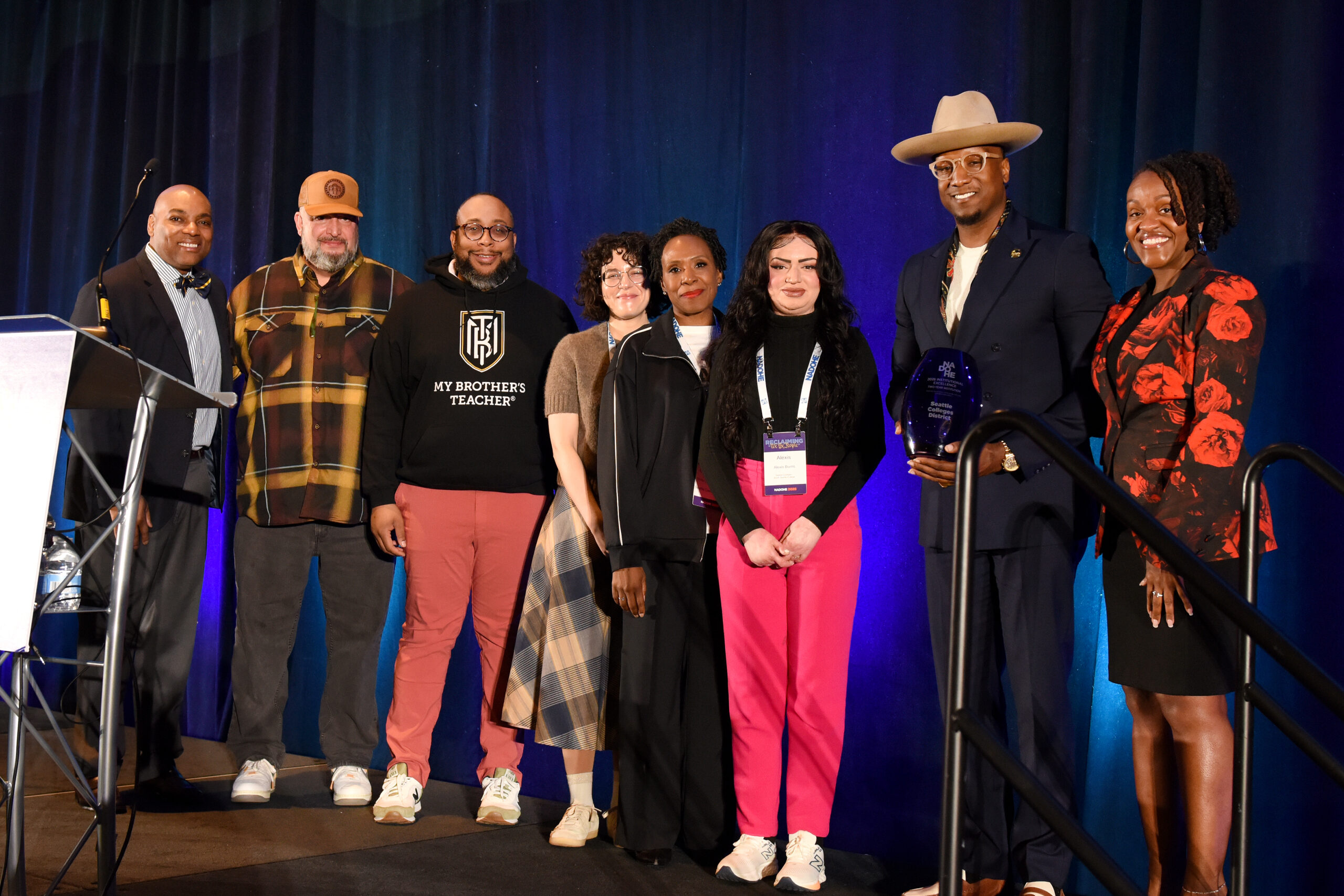
Seattle Colleges has been named the recipient of the 2026 Institutional Excellence Award for a two-year institution by the National Association of Diversity Officers in Higher Education (NADOHE), recognizing the system’s sustained efforts to advance equity and inclusion across its campuses.
The annual award honors colleges that demonstrate measurable progress in building and maintaining comprehensive diversity initiatives including leadership, curricular reform, professional development, accountability practices, and community engagement.
Seattle Colleges’ recognition reflects a broad, systemwide approach rather than a single program. D’Andre Fisher, associate vice chancellor of the Division for Access, Community, and Opportunity and senior equity officer for Seattle Colleges, framed the award as a collective achievement across the six member institutions.
“Winning an award of this magnitude means our beloved students, staff, faculty, administrators, external members, trustees, chancellor, presidents, and the entire Seattle Colleges community, are being seen,” Fisher said, pointing to years of work aimed at building an anti-racist, anti-bias institutional culture.

That work spans multiple initiatives designed to address systemic barriers and improve student outcomes. Programs such as Guided Pathways, TRIO, Seattle Promise, and Project Sisterhood focus on expanding access and retention, while faculty development efforts—including the Critical Pedagogy Institute and a cross-institutional mentorship program for faculty of color—support more inclusive teaching practices. Additional efforts range from workforce education and student leadership programs to identity-based collectives and multicultural engagement spaces.
Institutional planning has also shaped the system’s approach. In December 2024, the Seattle Colleges Board of Trustees approved a 10-year strategic plan developed with input from more than 1,000 stakeholders, including students, employees, and community members. The plan outlines priorities tied to equity, student success, and long-term institutional growth.
State policy has further reinforced these efforts. Washington lawmakers have enacted measures requiring diversity, equity, inclusion, and anti-racism training and assessments across higher education, alongside increased funding for equity-focused initiatives.
By embedding these initiatives into its structure, planning, and daily operations, Seattle Colleges’ approach aligns with NADOHE’s emphasis on sustained, measurable impact at the institutional level.