How student-centered leadership creates the conditions students need to thrive
When colleges and universities struggle with student retention, engagement, or well-being, the focus often turns inward to the classroom. Teaching and learning are, of course, central to higher education’s mission. Yet for many students, whether they persist, belong, and graduate is shaped just as powerfully beyond the lecture hall—in advising meetings, residence communities, counseling sessions, student organizations, career offices, cultural centers, and moments of quiet uncertainty about whether they truly fit in.
This reality underscores a critical truth for our field: student affairs is not supplemental to the academic mission. It is central to it.
Supporting student success requires more than strong programs or committed professionals. It requires leadership—at many levels—that intentionally builds the conditions in which innovation, collaboration, and student-centered work can thrive.

Innovation in student affairs does not happen simply because someone asks staff to be creative or to do more with less. It happens when people are given clarity, capacity, and trust to do meaningful work.
Those conditions matter whether someone is leading a division, coordinating a program, supervising students, or working directly on the front lines with those who need support the most.
One of the clearest signals of institutional values is how resources are stewarded. Budgets are moral documents. They demonstrate priorities more clearly than any mission statement. For student affairs professionals, understanding how resources are allocated—and advocating for alignment with student needs—is an essential leadership responsibility.
Responsible stewardship goes beyond balancing accounts. It asks harder questions: Are we investing in services students use? Are we responding to emerging challenges such as mental health concerns, basic needs insecurity, career preparation, and engagement? Are equity and access visible not only in our language, but in our spending?
Equally important is capacity. Innovation cannot be sustained in perpetual crisis mode. When staff are under-resourced and over-extended, the focus naturally shifts to survival rather than improvement.
When institutions invest in staffing, training, tools, space, and technology, they create room for professionals to test ideas, assess outcomes, and improve practice. Creativity requires capacity.
Strategic planning helps turn values into action. A meaningful plan should provide direction, establish priorities, and help individuals see how their daily work contributes to broader student success goals.
Too often, plans remain abstract or disconnected from practice. The most effective plans are created collaboratively, grounded in assessment, and informed by the lived experiences of students and staff.
Clarity does not end once a plan is written. It must be communicated consistently and translated into goals that staff understand and can influence. When people know where an organization is headed, they can exercise judgment, adapt their work, and align decisions with shared priorities. Clear communication reduces confusion and empowers action at every level.
Advocacy is another condition that enables innovation. Student affairs professionals are often among the strongest advocates for students, particularly those who are navigating complex systems or personal challenges.
Advocacy also means making the role student services plays in retention, learning and belonging visible, and ensuring those contributions are reflected in institutional conversations.
At the same time, advocacy must extend to staff. Many professionals carry the emotional labor of supporting students in crisis. Sustainable student success requires sustainable working conditions. Leadership includes setting realistic expectations, recognizing effort, and ensuring people feel supported, not depleted.
No student affairs unit or role operates in isolation. Students experience the institution as a whole and not as separate divisions. Supporting them effectively requires collaboration across academic affairs, enrollment management, facilities, finance, human resources and community partners. When professionals work across organizational boundaries, students encounter a more coherent and humane institution.
Data also plays an important role in this work. Assessment helps us understand who we are reaching, who we are missing, and where gaps persist. Utilizing participation data, climate surveys, learning outcomes, and student feedback allows us to make more informed decisions. Data should not be used only to justify existing work, but to ask better questions about how to improve it.
Yet numbers alone never tell the full story. Behind every data point is a student’s lived experience. The strongest practice combines evidence with empathy—listening carefully, recognizing patterns, and responding with both urgency and care.
Culture ultimately determines whether innovation is sustained. Collaborative environments do not emerge by accident. They are shaped by everyday interactions—whether ideas are welcomed, failures treated as learning opportunities, and people trusted to contribute. Leadership is not confined to titles; it shows up in how professionals support one another, share credit, and remain committed to collective goals.
Belonging, too, must be understood as an outcome of daily practices. A welcoming environment is reflected in policies, facilities, training, supervision, communication, and accountability. It requires courage to address barriers and to engage honestly in difficult conversations when they arise.
Higher education is navigating profound change. The challenges we face demand more than tradition or goodwill. They require intentional leadership at all levels—leadership that aligns values, resources, and action around student success.
In student affairs, our work is often most visible during moments of crisis. But our most important work happens long before that point—when we build environments that help students flourish rather than merely endure. That is where innovation takes root and where higher education’s promise is most fully realized.
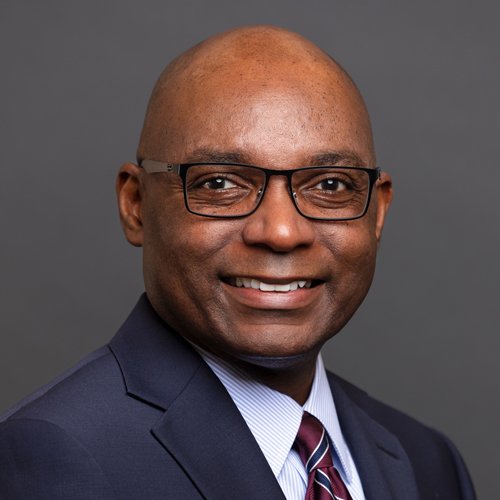
Eric A. Weldy, EdD, is vice chancellor for Student Affairs at Indiana University Indianapolis and a member of the Insight Into Academia Editorial Board.